
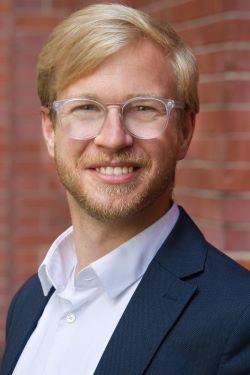
Martin Mann
Dr. Martin Mann has extensive experience at the intersection of academia, politics, and society. Since January 2026, he has served as Managing Director of the Berlin University Alliance, the alliance of excellence of Freie Universität Berlin, Humboldt-Universität zu Berlin, Technische Universität Berlin, and Charité – Universitätsmedizin Berlin. Previously, he served as Head of Unit for Societal Fundamental Issues and Transformations at the Office of the Federal President of Germany. Earlier positions include heading the Presidential Staff at the Berlin Social Science Center (WZB) as well as serving as a research officer at Technische Universität Berlin.
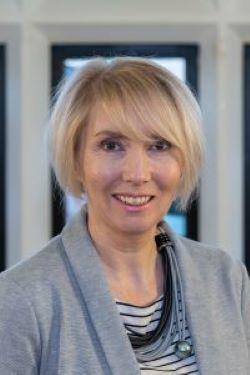
Elizabeth Gadd
Dr Elizabeth (Lizzie) Gadd is Head of Research Culture & Assessment at Loughborough University, UK. She chairs the International Network Of Research Management Societies (INORMS) Research Evaluation Group and immediate past Vice Chair of the Coalition on Advancing Research Assessment (CoARA). She co-authored the UKRI-commissioned report, 'Harnessing the Metric Tide: Indicators, Infrastructures & Priorities for UK Research Assessment' and was the recipient of the 2020 INORMS Award for Excellence in Research Management and Leadership & the 2025 ARMA Award for Advocacy in Research Management.

Steven Wooding
Dr Steven Wooding is Head of Research on Research in the Research Office at the University of Cambridge, and a Visiting Research Fellow at the Centre for Science Policy. His central research interest is how research itself works: from funding processes; to the social machinery of research and the wider impact of research. He has recently looked at the evidence behind using peer review for funding allocation and worked with foundations to develop improved methods of selecting research projects to boost innovation. Alongside his research interests Steve is lead for Outputs for the University of Cambridge’s submission for REF2021. Steve has broader interests in the use of evidence in policy; and approaches to visualising concepts and data. Previously, Steve worked at the Centre for Science Policy as Lead for Research; and at RAND Europe where he was Director of the Innovation Health and Science team. He advises on various projects around the assessment of research.
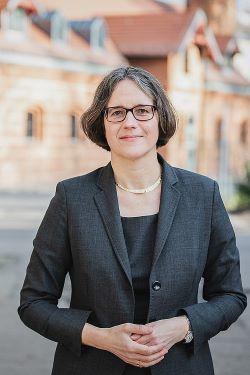
Julia von Blumenthal
Prof. Julia von Blumenthal is president of Humboldt-Universität zu Berlin since October 1st 2022. She received her degree in political science, international law and Russian literature from Hamburg University and her doctoral degree (2001) as well as her Habilitation (2007) in political science from the University of the Federal Armed Forces (today: Helmut-Schmidt-University) in Hamburg. Between 2007 and 2009 she was a visiting fellow in Canberra followed by temporary professorships at the universities in Lüneburg and Gießen. Julia von Blumenthal has been a Professor of German Politics at the Department of Social Sciences of the Humboldt-Universität zu Berlin since 2009. As a political scientist she has conducted research on German politics, especially on federalism and parliaments and on the role of higher education institutions for the integration of refugees. In 2014, she became Founding Dean of the Faculty of Humanities and Social Sciences. From October 2018 to October 2022 she was President of the European University Viadrina Frankfurt (Oder). In May 2024, she was elected as president of the European university alliance Circle U.

Jens Ambrasat
Dr. Jens Ambrasat leads the Berlin Science Survey at the Robert K. Merton Center (RMZ). Prior to that, he was senior researcher and survey methodologist at the German Centre for Higher Education Research and Science Studies (DZHW), where he headed the DZHW Scientist Survey. He studied philosophy, sociology, and economics at Humboldt University in Berlin and received his PhD from the FU Berlin. His dissertation dealt with the relationship between social structure, language and affect from a cultural sociological perspective.
His research interests are in the areas of research designs, survey methods and mixed methods, and disciplinary cultures in science
Steven Hill
Steven Hill is Senior Policy Advisor to the CEO at Digital Science. Prior to joining Digital Science Steven spent almost 20 years working in research policy and funding, for Research England (part of UK Research and Innovation), the Higher Education Funding Council for England, and Research Councils UK. His work covered research funding and assessment, open research, public engagement and impact. He was also chair of the steering group for the 2021 and 2029 Research Excellence Framework (REF). Prior to this Steven had roles at the Department for Environment, Food and Rural Affairs, working on evidence-based policy making. Earlier in his career Steven was a university lecturer at the University of Oxford where his research focused on plant biology.

Ludo Waltman
Prof. Ludo Waltman is scientific director and professor of Quantitative Science Studies at the Centre for Science and Technology Studies (CWTS) at Leiden University. He is co-chair of the Research on Research Institute (RoRI). Ludo’s work focuses on studying and developing infrastructures, algorithms, and tools to support research assessment, science policy, and scholarly communication. Ludo is open science ambassador of Leiden University, president of ASAPbio, and one of the initiators of the Barcelona Declaration on Open Research Information. Together with his colleague Nees Jan van Eck, Ludo has developed the well-known VOSviewer software for bibliometric visualization. Ludo serves as Editor-in-Chief of the MetaROR (MetaResearch Open Review) platform. Previously he was Editor-in-Chief of the journal Quantitative Science Studies.
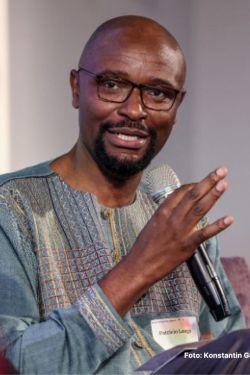
Patrício Langa
Patrício Langa is a professor of sociology and a global expert in higher education, science, policy, and innovation studies at the Faculty of Education, Eduardo Mondlane University (UEM) in Maputo, Mozambique. He serves as the Secretary General of the African Consortium of Higher Education Researchers (ACHER), a Pan-African research organisation headquartered in Ghana. Langa was the first DAAD Research Fellow and Visiting Professor at the Forum Internationale Wissenschaft at the University of Bonn in Germany, where he focused on the global aspects of higher education and the roles of science, technology, and innovation in the Global South. He has also held visiting positions at several institutions, including Danube University Krems in Austria, the University of Cape Coast in Ghana, the Autonomous University of Lisbon in Portugal, the University of Johannesburg in South Africa, KTH Royal Institute of Technology in Sweden, Ruhr University Alliance, College of Social Sciences and Humanities in Essen, Germany, and Worcester Polytechnic Institute in the USA.
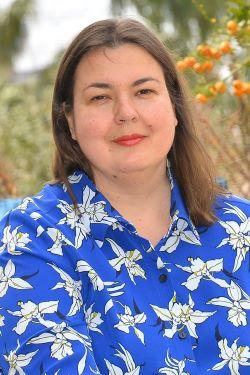
Anna Abalkina
Dr. Anna Abalkina is a research fellow at Freie Universität Berlin (Germany). She earned her Ph.D. from the University of Perugia (Italy) with a background in international economics. However, she later shifted her research focus to corruption in higher education, academic misconduct, plagiarism, paper mills, and predatory and hijacked journals. She studies how scientific misconduct operates, who benefits from it, how it affects research systems and beyond. In 2022, Anna Abalkina, in collaboration with Retraction Watch, created “The Retraction Watch Hijacked Journal Checker,” a regularly updated list of hijacked journals. She received Nature’s 10 award in 2024 for her work on exposing fraud.
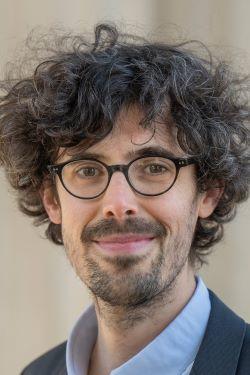
Romain Faure
Dr. Romain Faure serves as the coordinator of the Berlin Center for Global Engagement (BCGE), a joint platform of the Berlin University Alliance that aims to foster cooperation with partners in the Global South, engage in science diplomacy, and reflect current trends in internationalization. He holds a PhD in history from Technische Universität Braunschweig and Université Paris 1 Panthéon‑Sorbonne. He has more than ten years of experience in research management and is particularly interested in bridging discussions on research culture and research‑assessment reform with efforts to promote responsible internationalization.

Lara Abel
Lara is a Research Associate in the Research on Research group at the University of Cambridge. Her work focuses on the intersection of emotion and cognition, which she applies to the fields of metascience and practical ethics. In her current role, she investigates research culture and collaboration practices, with particular attention to how emotions shape academics’ professional experiences and how collaboration patterns relate to research outcomes. Lara’s interdisciplinary academic background spans Psychology, Computer Science, and Practical Ethics. Alongside her research career, Lara works as a freelancing market researcher and academic tutor.
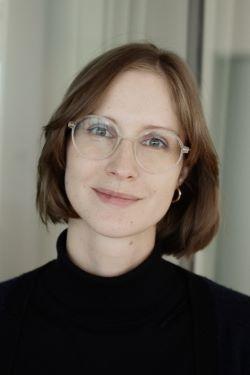
Meta Cramer
Dr. Meta Cramer is a senior researcher at the Robert K. Merton Center for Science Studies at Humboldt-Universität zu Berlin. Her work explores how research evaluation regimes shape the everyday work practices of scholars, how publishing cultures differ across disciplines and regions, and how these dynamics reproduce entrenched institutional and global inequalities. She is currently part of an international research team investigating predatory publishing practices. Meta studied sociology, political science and economics in Germany, the UK and Israel and received her PhD in Sociology from the University of Freiburg. Her dissertation dealt with colonial legacies and global inequalities in social science knowledge production.

Priya Silverstein
Priya Silverstein is a meta-researcher, educator, and open science advocate specialising in research credibility, open science uptake, and advances in scholarly communication. As part of their work on scholarly communication, Priya was the founding Community Manager and now Associate Director of the Journal Editors Discussion Interface (JEDI) — an online community for journal editors across the social sciences with over 600 members. JEDI is comprised of a listserv and resource collection, and its main aim is to increase the uptake of open science policies and practices at journals. Through their work at JEDI, Priya has led the creation of a guide for journal editors on how to implement dozens of open science related policies and practices, and they are currently co-leading research on journal editors’ barriers to adopting these policies and practices.
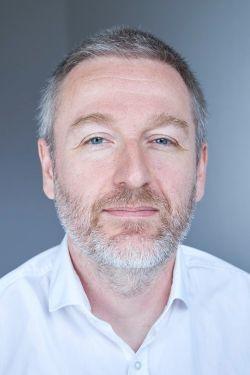
Martin Reinhart
Martin Reinhart is professor for science studies and evaluation research at the Berlin School of Library and Information Science and acting director of the Robert K. Merton Center for Science Studies. He studied sociology, economics and computer science at the University of Basel, where he received a doctorate in 2012, specialising in science studies and research on peer review. He worked at the universities of Basel, Lucerne, and ETH Zürich and is now active at Humboldt-Universität zu Berlin and the German Center for Higher Education Research and Science Studies. His research interests are research evaluation, the relation between science and society, translation of scientific knowledge, and the governance of science.