
The BUA Fellows Club Meets... The Falling Walls Foundation
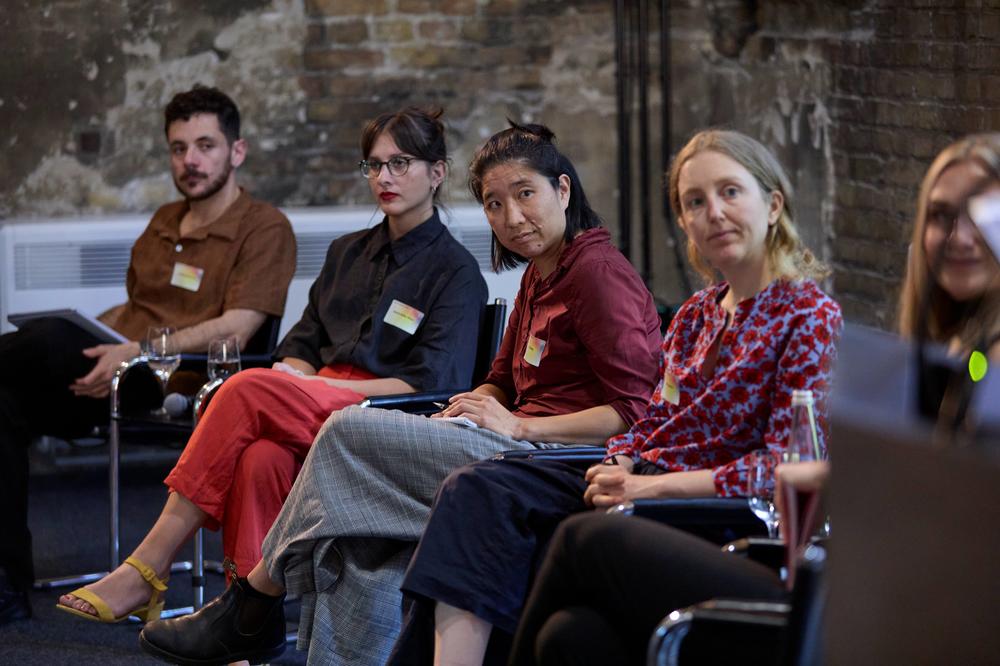
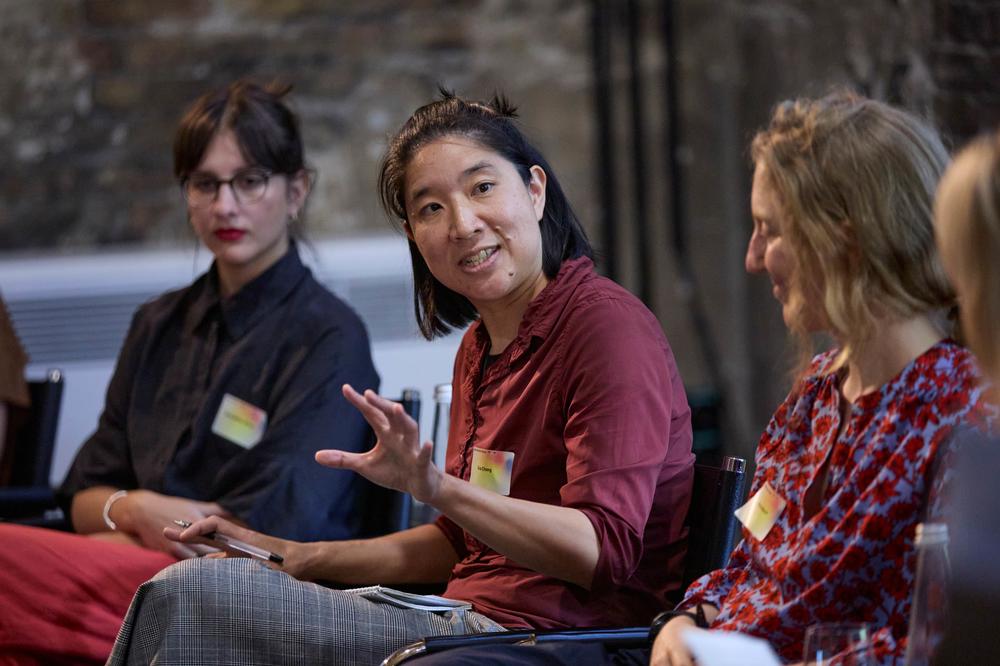
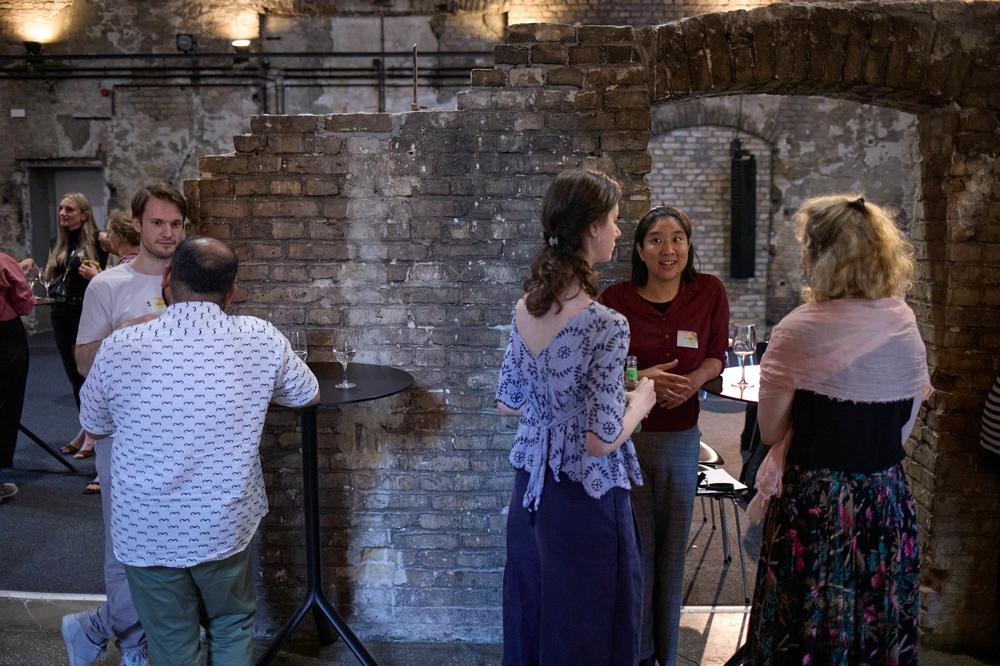
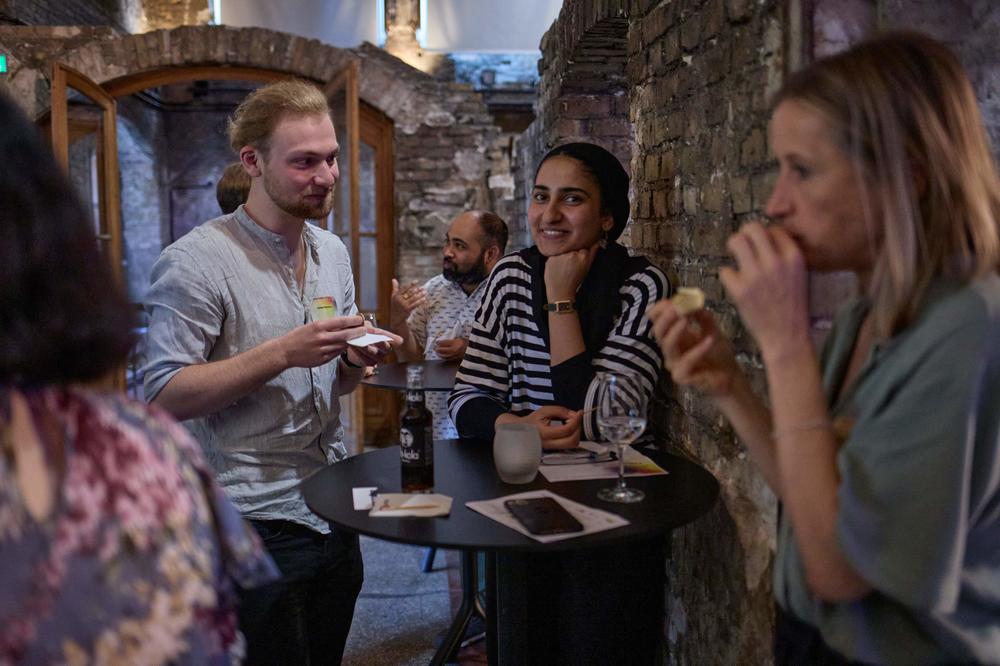
International Fellows of Berlin University Alliance came together the evening of June 18, 2026, at the Hörsaalruine of Charité’s Medical History Museum for the fourth Fellows Forum, this time with a focus on science communication. The evening featured a collaboration with Berlin’s Falling Walls Foundation, a global platform that brings together science, business, politics, and the arts to communicate breakthrough ideas, providing BUA Fellows with a preview of this year’s Berlin Science Week program and avenues to get involved.
A highlight of the event was a panel discussion, Engaging Democratic Societies in Science, including BUA Fellows Dr. Samia Akhter-Khan, Prof. Dr. Eva Cheng, and Dr. Luciano Santander, along with science communicator Pauline Münch. Moderated by Christina Hooge, Head of Falling Walls Engage, the discussion addressed the importance of participatory research methods for bridging gaps between science and society, ideas for restoring eroded public trust, positionality as researchers, and what good science communication looks like in practice. A networking reception closed the evening.
Dr. Samia C. Akhter-Khan is Research Group Lead of the Climate, Aging, and Relationships (CARE) lab at the Brandenburg Medical School. In 2025, she completed her PhD in Global Mental Health at King’s College London and previously completed her BSc/MSc degrees in Psychology at the Humboldt-University of Berlin. Her transdisciplinary research program investigates loneliness in later life, with a specific focus on Southeast Asia. She has conducted mixed-methods and participatory field work with older minoritized people and migrants in Myanmar and Thailand over several years. She has published over 25 journal articles, including in Nature Health and Alzheimer’s & Dementia, contributed to a WHO report on ageing and climate change, and has been featured in media outlets like Science Magazine, The Guardian, and The Economist. Associate Prof. Eva Cheng is BUA’s current Audre Lorde Visiting Professor for Intersectional Diversity Studies and Associate Professor and Head of School (Professional Practice and Leadership), in the Faculty of Engineering and IT at University of Technology in Sydney (Australia). She combines expertise in engineering and multimedia signal processing with a commitment to intersectional gender, diversity, and equity research in STEM. Eva develops initiatives and leads academic teams towards intersectional, sociotechnical knowledge integration in curriculum, teaching, and institutional practices. She collaborates with diversity programs such as UTS Women in Engineering and IT, UTS Centre for Social Justice and Inclusion, and various civil society organisations. Her work integrates transdisciplinary partnerships to expand access to sociotechnical professions for underrepresented groups. Pauline Münch is a science communicator working at the intersection of research, art, and public engagement. Drawing on practice-based and transdisciplinary methods, she explores themes of water, infrastructure, and climate through participatory and multimodal approaches. Her work spans written publications, installations, and experiments in audio, drawing, and digital formats — always seeking new ways to exchange knowledge. She collaborates with artists, researchers, and communities across DFG, EU, and BUA funded projects and is currently based at the Integrative Research Institute for Transformations of Human-Environment Systems (IRI THESys) at Humboldt-Universität zu Berlin. Dr. Luciano Santander is a political scientist and holds a PhD in Sociology from the Freie Universität Berlin. His work focuses on political sociology, far-right studies, and European and Latin American politics. His research examines the radicalization of political elites, authoritarianism, and the reconfiguration of right-wing actors in democratic contexts, with particular attention to comparative debates between Europe and Latin America. Christina Hooge is Head of Falling Walls Engage, the global platform for science engagement connecting initiatives that strengthen the relationship between science and society. She leads strategy, partnerships, and programme, including a global call for applications and the curation of an international advisory board and jury for the Engage pitch competition. Together with her team, Christina builds a global network of science communicators, research institutions, and public audiences to showcase best practices in science engagement and advance the Falling Walls Foundation’s mission worldwide.