
Save the Date! The BUA Fellows Club Meets... ICI Berlin Institute for Cultural Inquiry

Save the Date: The Fellows Club Meets... ICI Berlin Institute for Cultural Inquiry
As usual, this Forum will include a moderated panel discussion, Bridging Fields, Solving Problems: Interdisciplinary Research for Global Challenges, in which scholars from both the Fellows Club and the Institute for Cultural Inquiry Berlin will exchange insights on their work. A catered reception for community-building and networking across disciplines will close the evening.
Early registration is now open via this online form. An official invitation and full event program will be circulated in the coming weeks to Fellows Club members. In the meantime, save the date so you don’t miss the chance to engage with a diverse and interdisciplinary community of researchers from across Berlin—and the world! If you are not yet a Fellows Club member, sign up to stay in the loop!
Please do not hesitate to reach out to us directly with any questions at fellowsclub@berlin-university-alliance.de.
Previous Events
Since its launch in November 2024, Fellows of the Berlin University Alliance have gotten to know a range of research actors in Berlin.
Dr. Samia C. Akhter-Khan is Research Group Lead of the Climate, Aging, and Relationships (CARE) lab at the Brandenburg Medical School. In 2025, she completed her PhD in Global Mental Health at King’s College London and previously completed her BSc/MSc degrees in Psychology at the Humboldt-University of Berlin. Her transdisciplinary research program investigates loneliness in later life, with a specific focus on Southeast Asia. She has conducted mixed-methods and participatory field work with older minoritized people and migrants in Myanmar and Thailand over several years. She has published over 25 journal articles, including in Nature Health and Alzheimer’s & Dementia, contributed to a WHO report on ageing and climate change, and has been featured in media outlets like Science Magazine, The Guardian, and The Economist.
Associate Prof. Eva Cheng was BUA’s Audre Lorde Visiting Professor for Intersectional Diversity Studies from 2025 to 2026 and Associate Professor and Head of School (Professional Practice and Leadership), in the Faculty of Engineering and IT at University of Technology in Sydney (Australia). She combines expertise in engineering and multimedia signal processing with a commitment to intersectional gender, diversity, and equity research in STEM. Eva develops initiatives and leads academic teams towards intersectional, sociotechnical knowledge integration in curriculum, teaching, and institutional practices. She collaborates with diversity programs such as UTS Women in Engineering and IT, UTS Centre for Social Justice and Inclusion, and various civil society organisations. Her work integrates transdisciplinary partnerships to expand access to sociotechnical professions for underrepresented groups.
Pauline Münch is a science communicator working at the intersection of research, art, and public engagement. Drawing on practice-based and transdisciplinary methods, she explores themes of water, infrastructure, and climate through participatory and multimodal approaches. Her work spans written publications, installations, and experiments in audio, drawing, and digital formats — always seeking new ways to exchange knowledge. She collaborates with artists, researchers, and communities across DFG, EU, and BUA funded projects and is currently based at the Integrative Research Institute for Transformations of Human-Environment Systems (IRI THESys) at Humboldt-Universität zu Berlin.
Dr. Luciano Santander is a political scientist and holds a PhD in Sociology from the Freie Universität Berlin. His work focuses on political sociology, far-right studies, and European and Latin American politics. His research examines the radicalization of political elites, authoritarianism, and the reconfiguration of right-wing actors in democratic contexts, with particular attention to comparative debates between Europe and Latin America.
Christina Hooge is Head of Falling Walls Engage, the global platform for science engagement connecting initiatives that strengthen the relationship between science and society. She leads strategy, partnerships, and programme, including a global call for applications and the curation of an international advisory board and jury for the Engage pitch competition. Together with her team, Christina builds a global network of science communicators, research institutions, and public audiences to showcase best practices in science engagement and advance the Falling Walls Foundation’s mission worldwide.

Science Communication Workshop with the BUA Fellows Club
Image Credit: Berlin University Alliance
How can your research reach and resonate beyond academia? In this interactive workshop, which took place on April 30, 2026, BUA Fellows explored a range of communication formats and applied them directly to their own research.
The afternoon workshop kicked off with an introduction to the theory and practice of science communication, followed by reflection on the positionality and topic of researchers to inform the development of custom communication strategies. Participants developed prototypes according to desired outcomes and target groups and received feedback from their peers.


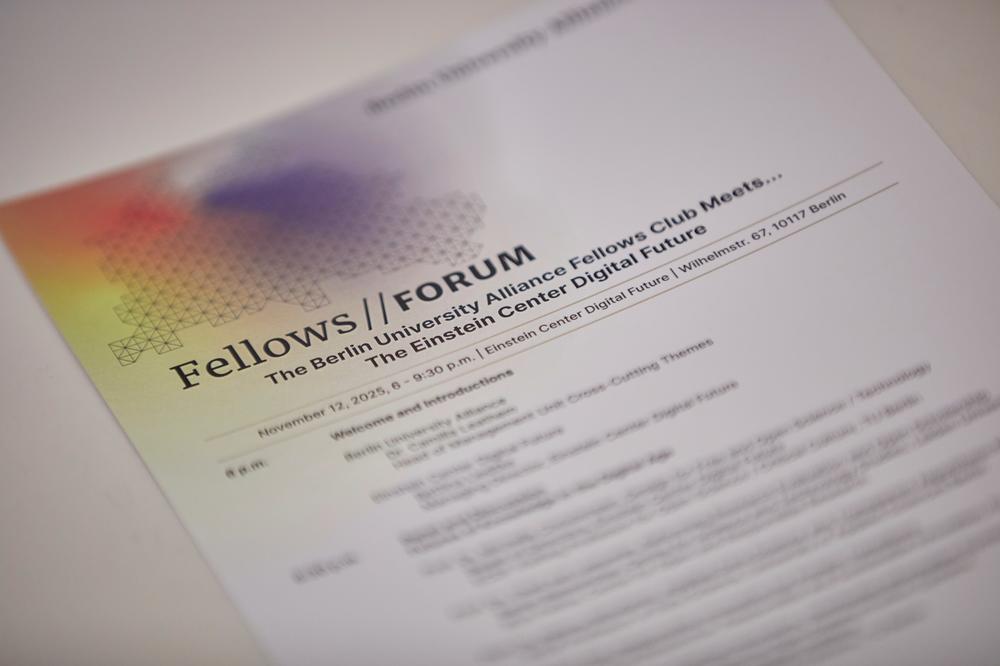


The third Fellows Forum, The Berlin University Alliance Fellows Club Meets… the Einstein Center Digital Future (ECDF), took place on Wednesday, November 12, 2025. Bringing together BUA Fellows from across disciplines and career stages with researchers from the ECDF, the event opened with an introduction to the organizational objectives, research opportunities and outlooks of both the BUA and ECDF by Head of Management Unit Cross-Cutting Themes Camilla Leathem and Managing Director Bettina Liedtke, respectively.
A panel discussion titled Futures of Knowledge in the Digital Age convened experts on applied large language models, open science principles, bibliometrics and academic publishing and responsible innovation frameworks—all topics of high interest to researchers from all fields. Moderated by Prof. Dr. Manfred Hauswirth of TU Berlin, the discussion featured BUA Fellows Prof. Dr. Thed van Leeuwen of Leiden University and Dr. Rosalyn Old of FU Berlin, as well as ECDF researchers Prof. Dr. Helena Mihaljević of HTW Berlin and Prof. Dr. Michelle Christensen of TU Berlin.
Panelists identified challenges presented by the rapidly increasing application of machine learning models throughout academia, citing bias in algorithms, floods of low-quality, machine-produced publications, and how open access sources are used to improve proprietary models with little transparency or accountability. Proposed solutions included applying responsible innovation frameworks to shape digital transformations that dismantle, rather than exacerbate, existing inequalities and leveraging the intersection of the diversity and open science movements to challenge the very biased and proprietary nature of today’s most pervasive digital technologies. In the end, panelists were in agreement that human-led decision making in open science, alongside robust computational research focusing on understanding, reproducibility, and open, accountable systems, can promote a less biased and more open digital future.
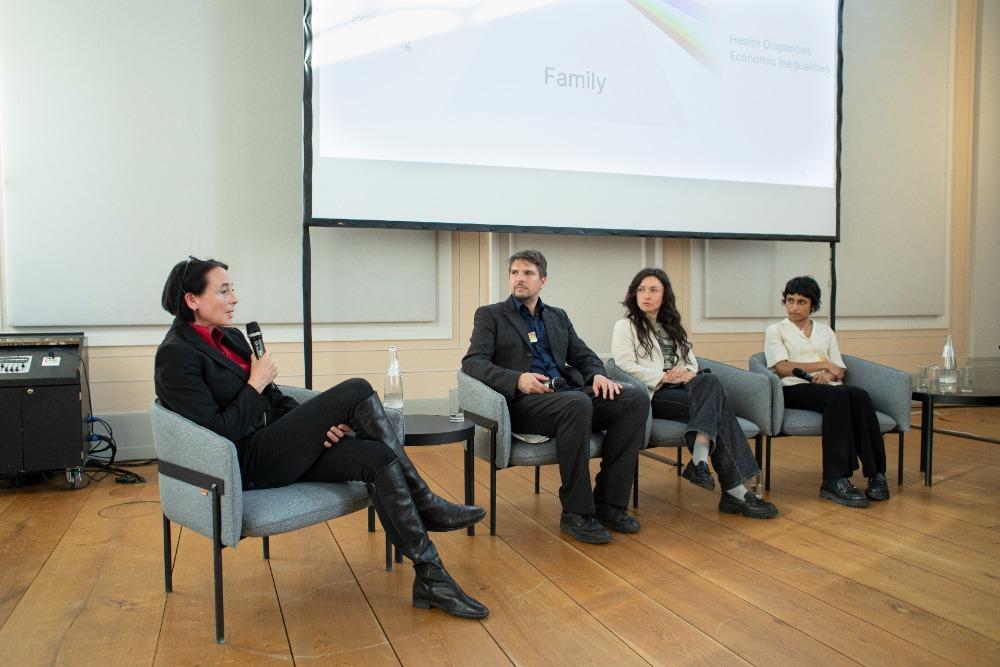
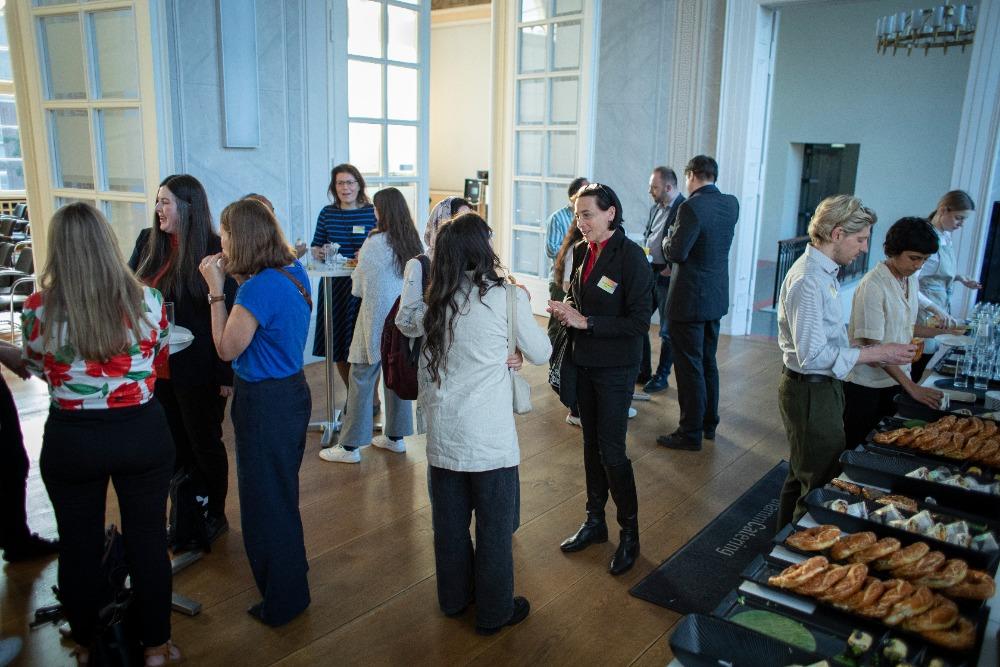
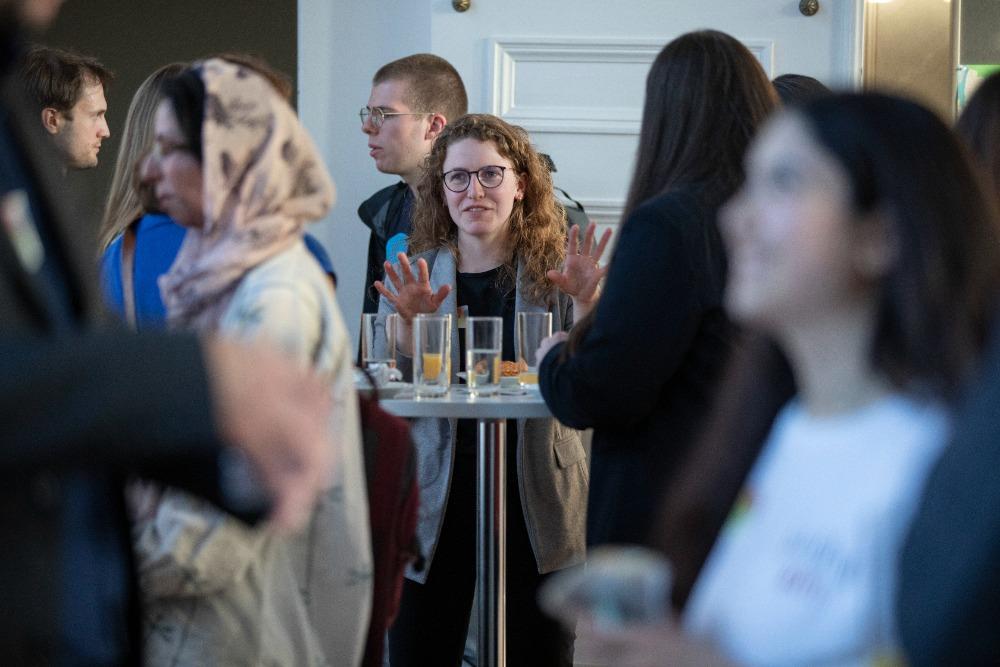
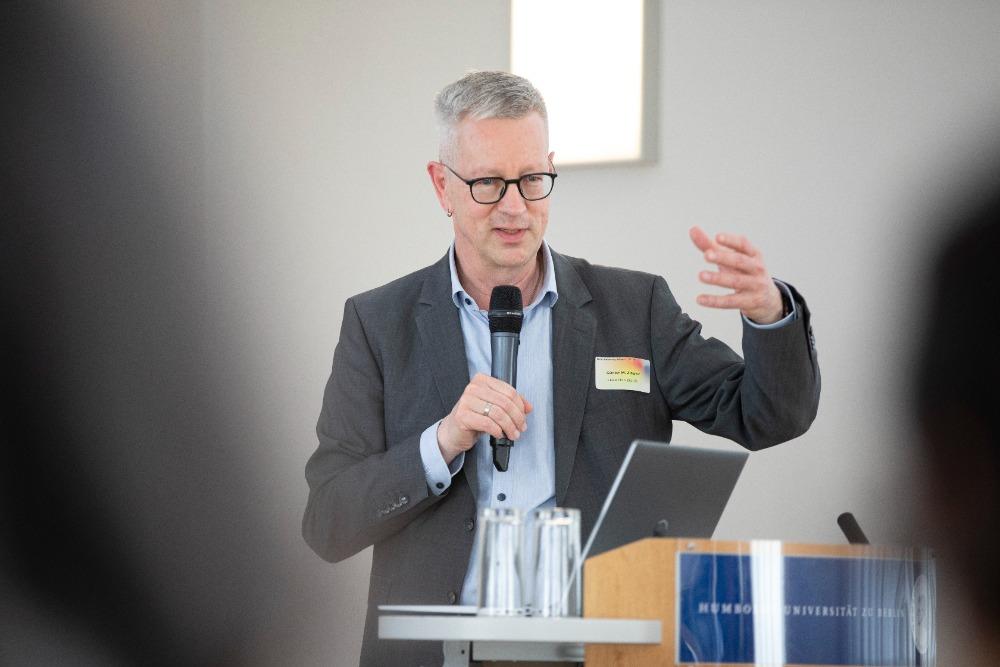
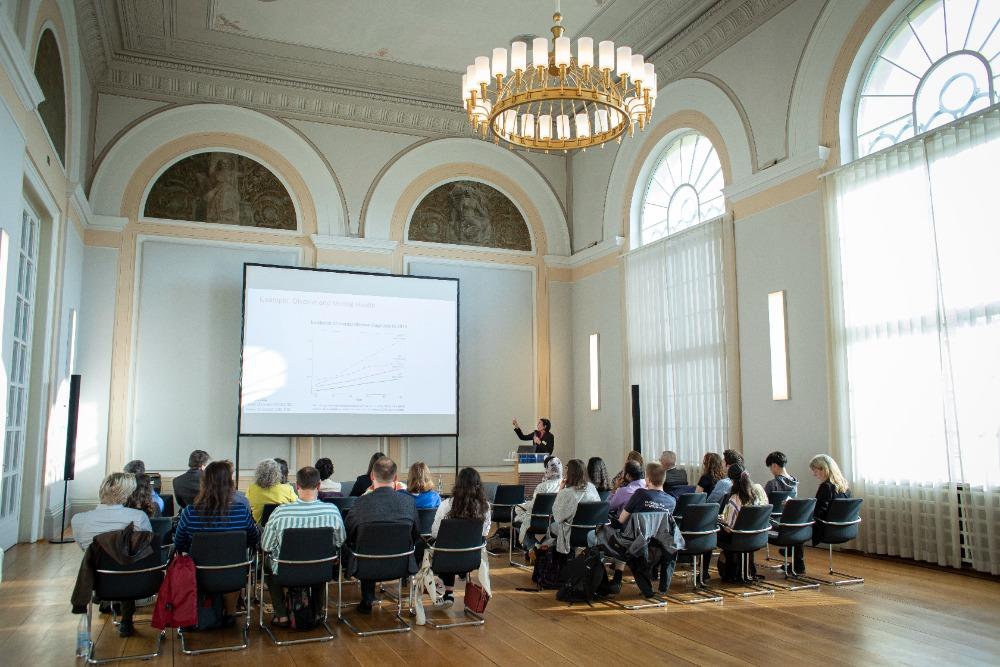
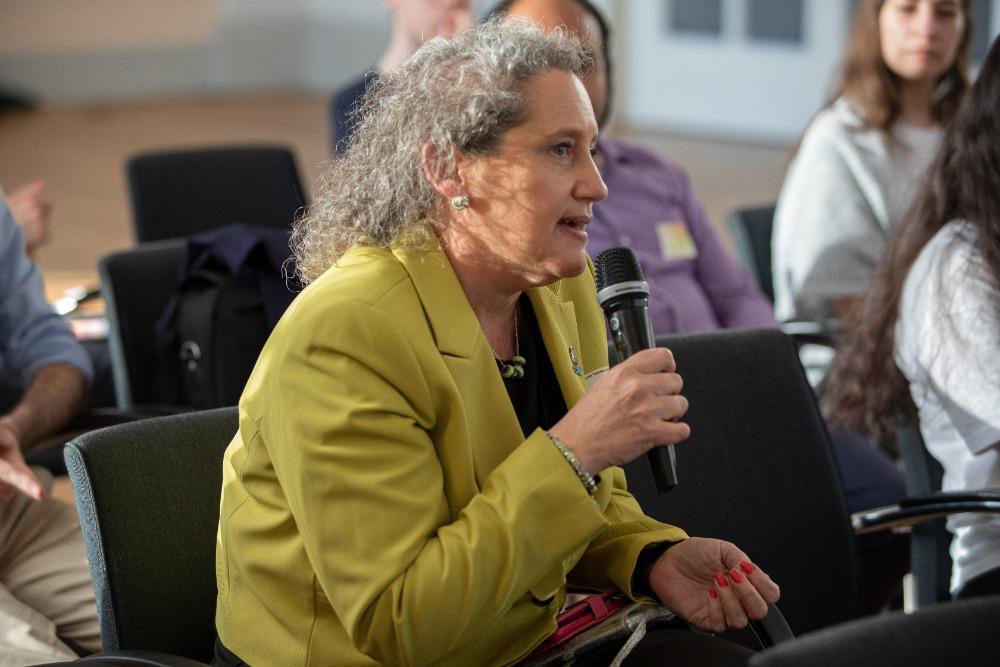
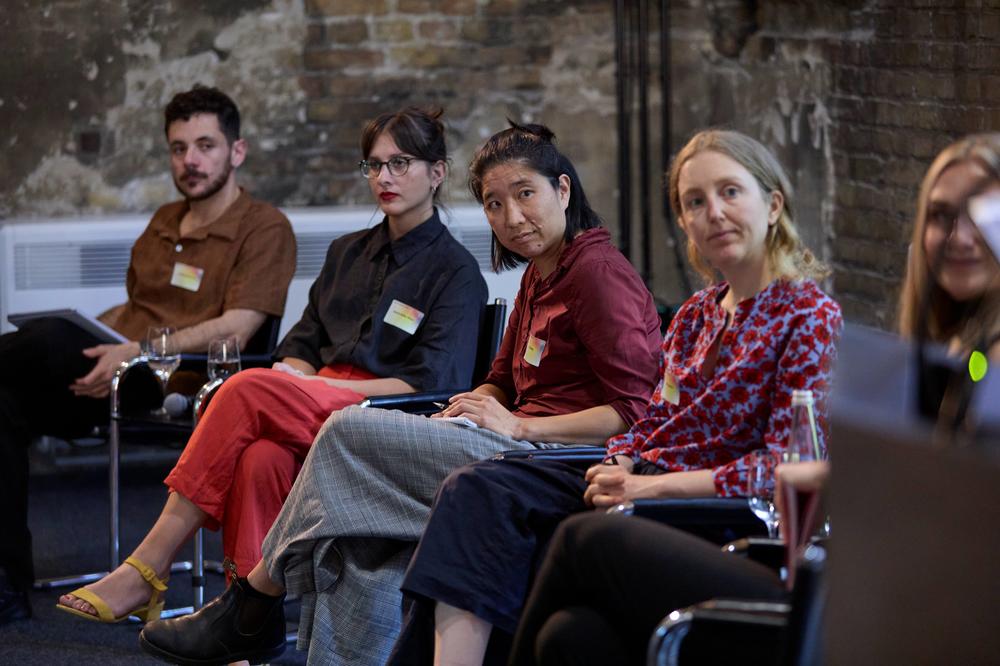
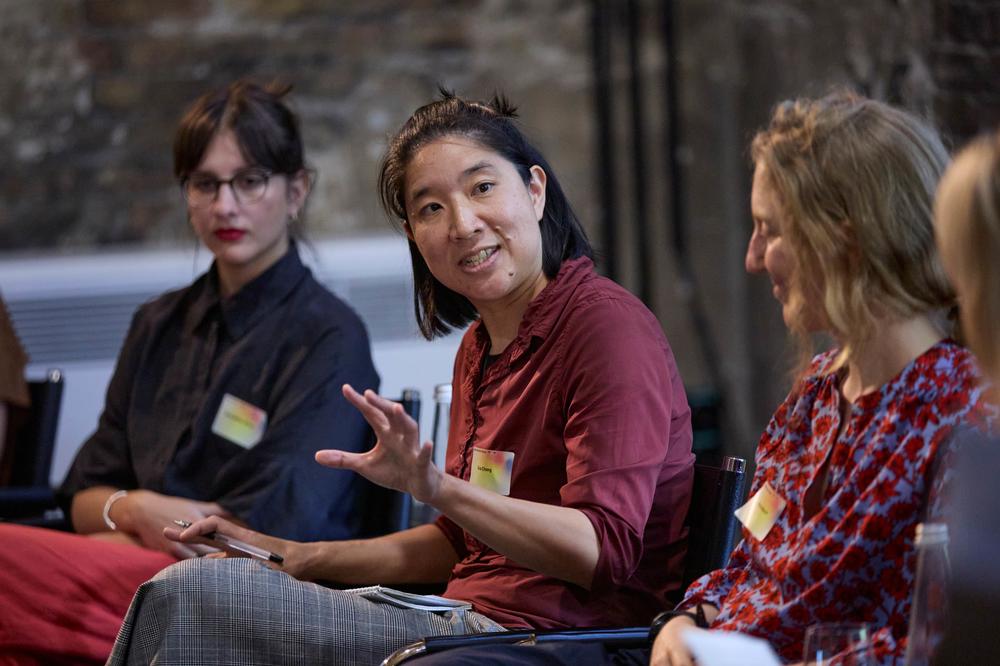
Also featuring a panel discussion titled Methods of Inclusion: Designing Research for a Plural World and moderated by Dr. Sarah Bellows-Blakely of FU Berlin's Margherita von Brentano Zentrum, the Fellows Forum brought together international and Berlin-based researchers to exchange about the challenges and opportunities for inclusive research design across scientific disciplines. BUA Fellows Dr. Fariha Azad of TU Berlin and Dr. Matthias König of HU Berlin showcased their research on quantum physics and computational approaches to healthcare, respectively, in dialogue with ECPD sociologists and demographers Dr. Lara Bister and Prof. Dr. Michaela Kreyenfeld. The panel discussion shed light on the demand for reflection on how developments in the physical and life sciences can contribute to and magnify existing social inequalities and the pressing need to promote integrated, transdisciplinary collaboration to uncover inclusive and responsible methodologies.
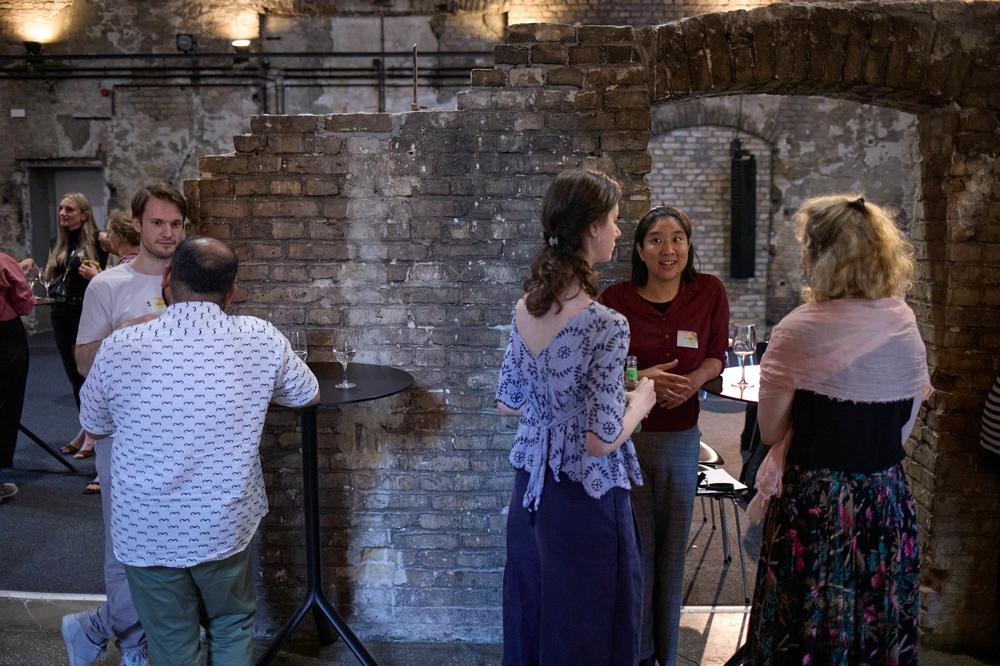
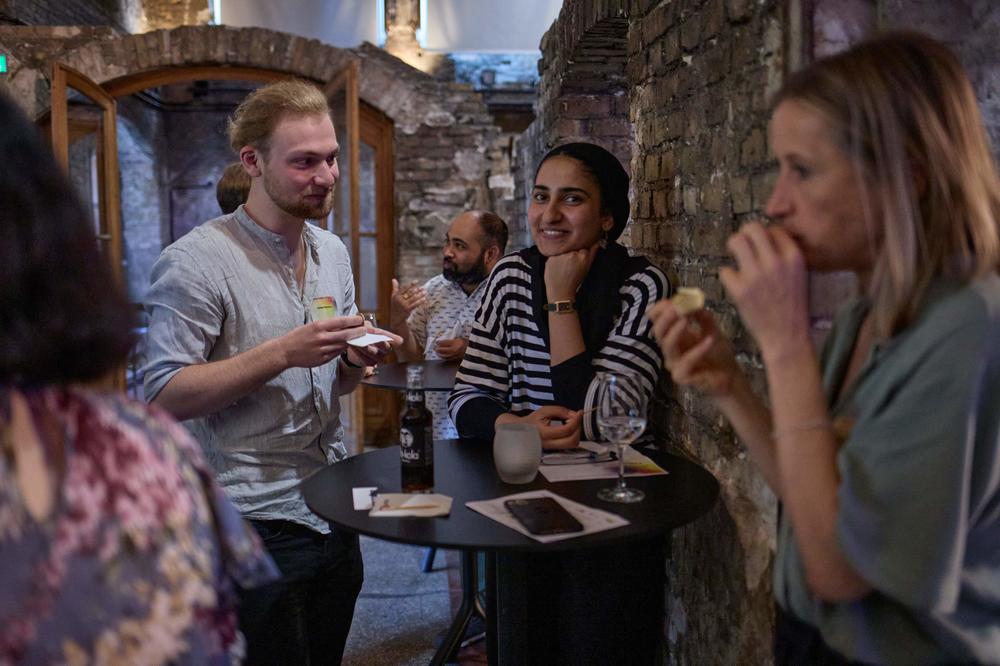
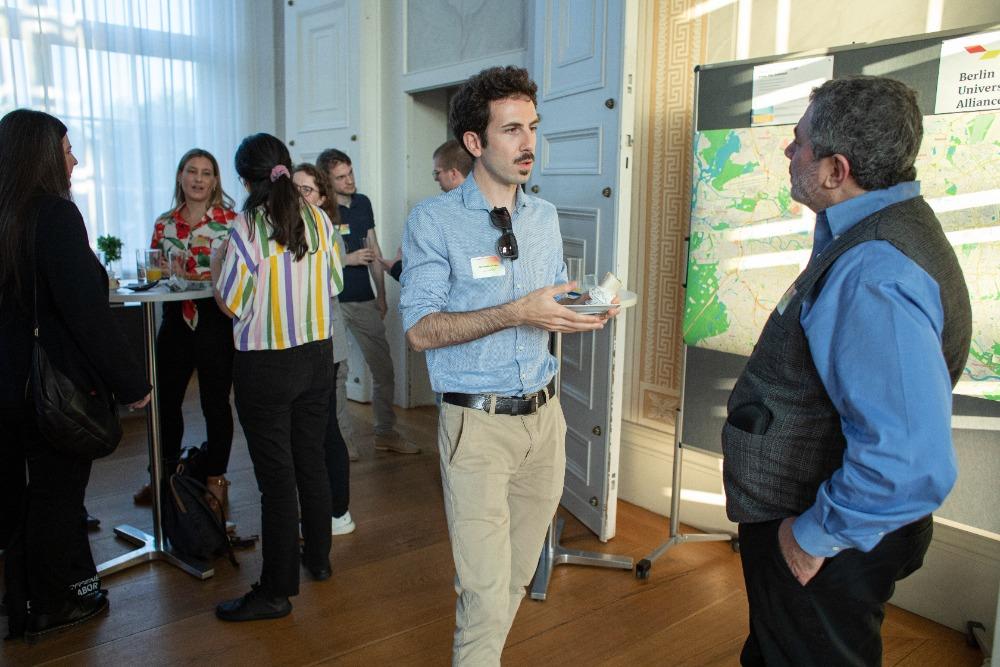
The Fellows Forum event series aims to provide a welcoming atmosphere for new and established Fellows within the Berlin University Alliance and its Clusters of Excellence and to foster collaboration. A catered networking reception followed the panel, in which participants exchanged about both their ongoing work and their favorite spots for newcommers to Berlin using a city map and pinboard.
With a focus on research as well as professional and personal experiences of Berlin as a science location, the Fellows Forum combines insightful contributions with discussion and networking opportunities. In this way, the event series helps to create a forum to support exchange and networking within the unique and international BUA community of the Fellows Club.
The Fellows Forum takes place at least twice a year. The next meeting will take place in autumn/winter 2025. Further information will be published as soon as it is available.

BUA Fellows at the Fellows Forum Launch
The first Fellows Forum took place on Monday, November 4th, 2024, at the Max Planck Society's Harnack House.
The Forum aims to provide a welcoming atmosphere for new and established Fellows within the Berlin University Alliance and its Clusters of Excellence and to foster collaboration.
With a focus on research as well as professional and personal experiences of Berlin as a science location, the first Fellows Forum combined insightful contributions with discussion and networking opportunities. In this way, the event series helps to create a forum to support exchange and networking within the unique BUA community of the Fellows Club.
The Fellows Forum now takes place at least twice a year.