
SPOTLIGHTS: Strategies for the future of collaborative research worldwide

SPOTLIGHTS on collaborative research infrastructures worldwide
Image Credit: Simon Brunel, Nicolas Pannetier, Polina Tikk
What does collaborative research look like around the world?
The SPOTLIGHTS program brings global perspectives to PartWiss 26 – the largest conference in Germany on participation in science. It highlights people, institutions, and support structures making collaborative research possible. Together, we’ll explore how transdisciplinarity, participation, and public engagement are embedded in science systems worldwide.
SPOTLIGHTS - Let’s talk
Nine sessions, nine perspectives: In nine online talks, 14 experts from nine countries shared how they shape funding, governance, and collaboration between science and society at their institutions. The result was an inspiring international learning community - spanning from Michigan and Kyoto to Auckland, Oxford, and Montevideo, all the way to Lagos and Goa.
Here you can find the series of video recordings for the SPOTLIGHTS - Let's talk sessions.

Session 1
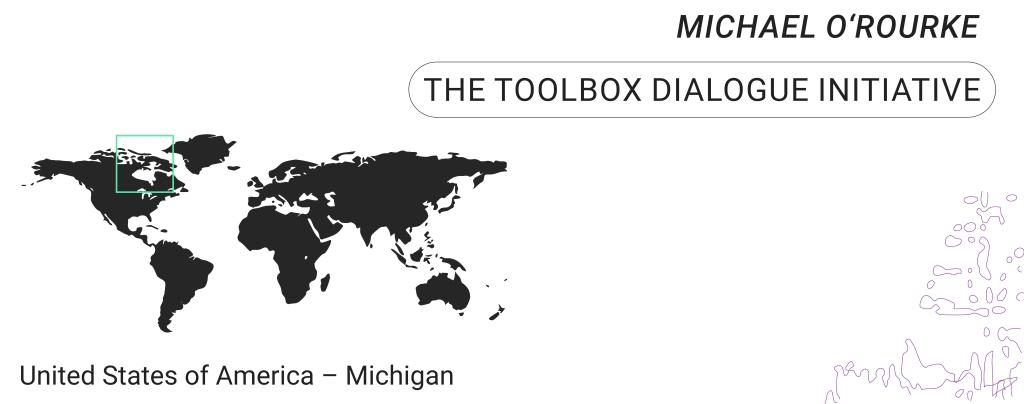
Guest: Michael O'Rourke - Director of the Toolbox Dialogue Initiative
Since 2005, the Toolbox Dialogue Initiative (TDI) has been conducting research on successful cross-disciplinary collaboration while also offering workshops on the topic - now numbering over 600 worldwide, funded primarily by the National Science Foundation and NASA.
The basic idea: Members of heterogeneous teams know that they differ, but they don’t know exactly how - and they even underestimate these differences. A specially developed “Toolbox instrument” makes these differences visible through dialogue before a joint co-creation phase begins.
What makes it special: The process facilitation in workshops and research forms is a feedback loop - each workshop provides data for the research, which in turn improves the next round of process facilitation.
You can find the recorded session on YouTube: https://www.youtube.com/watch?v=p25Wv4pKIOQ&list=PLe5e9bP--Pyc&index=7
Click here for the presentation slides.
Session 2
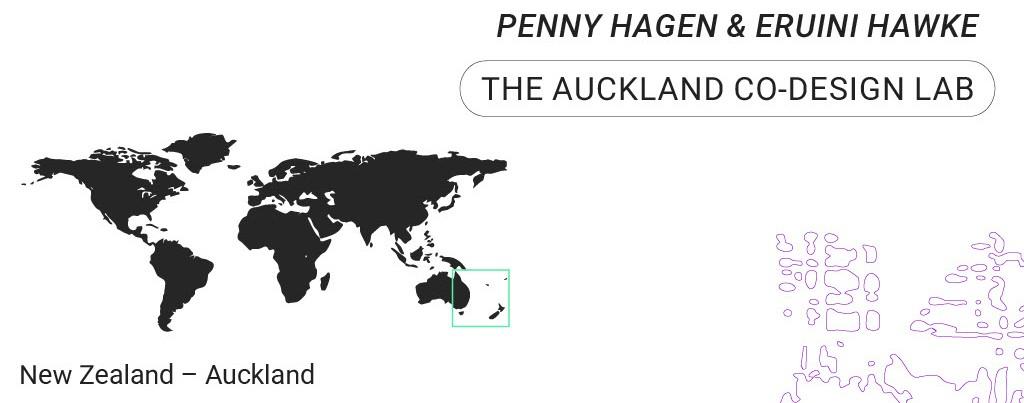
Guests: Penny Hagen – Co-Leader of the Auckland Co-Design Lab & Eruini Hawke - kaitiaki, cultural guardian protecting Māori land and its living environment as member of the Auckland Co-Design Lab
The lab was founded in 2015; since 2017, it has been jointly funded by the Auckland Council and central government agencies, and is based there.
The basic idea: Te Tiriti o Waitangi forms the foundation of this work; mātauranga Māori (Māori knowledge) is intended to help shape systemic change not only “for” but also “by” Māori. Different outcomes require different, locally rooted starting points rather than top-down solutions. On this basis, practice-based insights are developed to support regional policy and administration.
What makes it special: The dual role between local government and the central government makes the Lab a mediator - especially on issues that fall outside the purview of any single agency. Training sessions and reports have evolved into genuine collaboration with government partners.
You can find the recorded session on YouTube: https://www.youtube.com/watch?v=V7NrQ3deMpc&list=PLe5e9bP--Pyc&index=6
Click here for the presentation slides.
Session 3
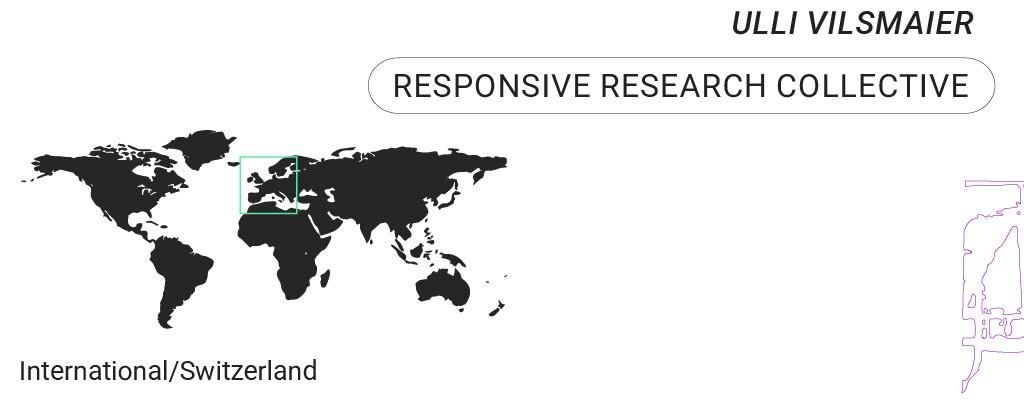
Guest: Ulli Vilsmaier – Founding member of the Responsive Research Collective
A loosely organized network of researchers, educators, and organizational developers, and curators from various regions of the world, founded in 2022.
The basic idea: Accompaniment as a distinct, relational form of practice- drawing on Latin American action research, the “epistemologies of the South”, and decolonial approaches. The Goal is supporting and accompanying teams and institutions in transforming towards inter- and transdisciplinarity research and education.
What makes it special: Instead of a fixed methodology, the collective relies on a shared approach: the “accompaniment” of teams and institutions on their path toward transdisciplinary research - funded on an activity-by-activity basis by the institutions being supported.
You can find the recorded session on YouTube: https://www.youtube.com/watch?v=yfQLSFL3f7I&list=PLe5e9bP--Pyc&index=5
Click here for the presentation slides.
Session 4
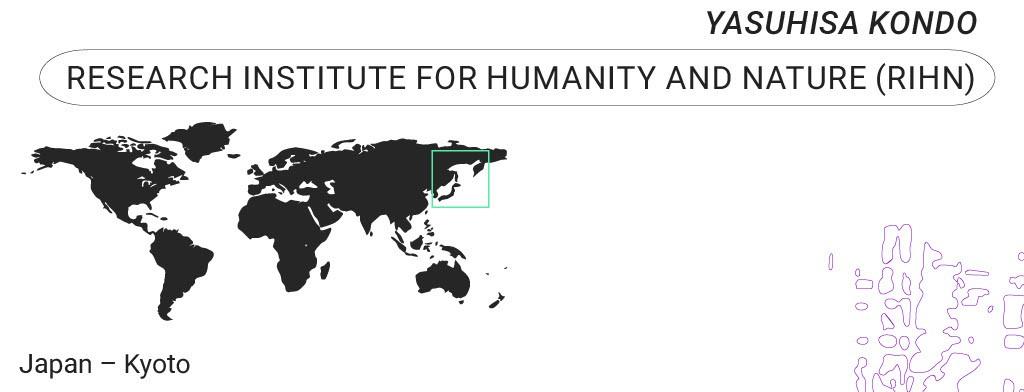
Guest: Yasuhisa Kondo, Professor at RIHN and Chair, Global Environmental Studies, SOKENDAI
RIHN is one of about 20 nationally funded “Inter-University Research Institutes” in Japan and focuses on socio-ecological issues.
The basic idea: The overarching concept is futurability: More important than the question of how today’s lifestyle can be sustained is the question of how to enable future generations to lead better lives. Global environmental problems are explicitly understood as a cultural issue in this context.
What makes it special: RIHN provides support primarily through project financing: The projects go through a tiered “stage-gate” process - incubation, feasibility study, evaluation, a five-year full-scale project phase, and a three-year wind-down phase - thereby securing stable, multi-year funding (an annual budget of approximately 7 million euros).
You can find the recorded session on YouTube: https://www.youtube.com/watch?v=gYctdOBqTf4&list=PLe5e9bP--Pyc&index=4
Click here for the presentation slides.
Session 5
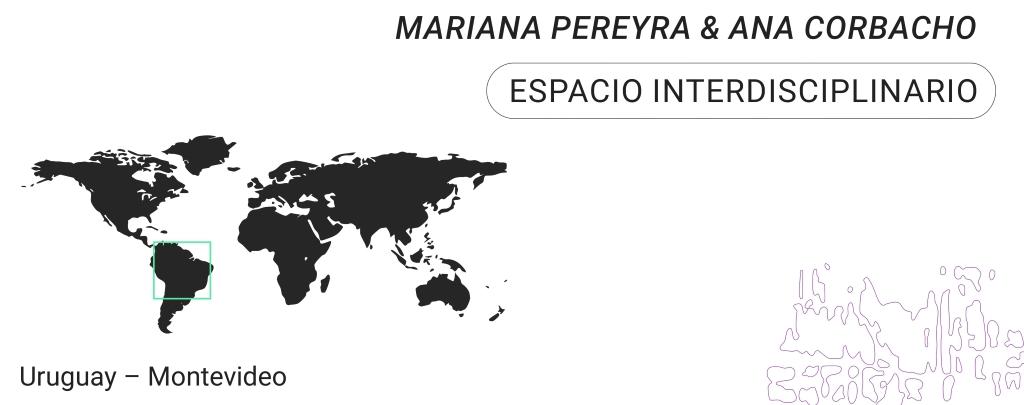
Guests: Mariana Pereyra - professor at the EI and the Nuclear Research Center at Udelar & Ana Corbacho - associate professor and academic coordinator at EI UDELAR
The Espacio Interdisciplinario (EI) was founded in 2009 at Uruguay’s largest public university—as a cross-cutting structure spanning all faculties and regional centers.
The basic idea: In Latin America, collaboration with society is historically rooted in the “extension” tradition (community outreach) - which is why the term “participatory action research” is often used instead of “transdisciplinarity”. Despite this regional tradition of collaboration, its academic recognition as a research approach remains a challenge.
What makes it special: A tiered funding system - ranging from small start-up grants to multi-year centros (currently 16) - integrates teaching, research, and extensión. This is complemented by the ProESIT program: Faculty and students undergo the same intensive training in interdisciplinary teamwork through an immersive, problem-oriented teaching training program before returning as a team to collaborative, applied research projects, thereby closing the cycle of teaching and learning.
You can find the recorded session on YouTube: https://www.youtube.com/watch?v=BsCsK12RdEI&list=PLe5e9bP--Pyc&index=3
Click here for the presentation slides.
Session 6
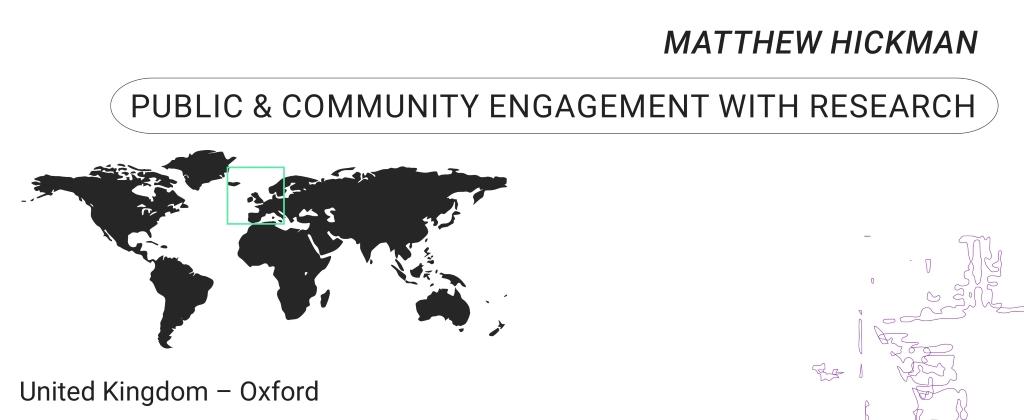
Guest: Matthew Hickman - Head of the PCER team and Acting Assistant Director of Innovation and Engagement
In 2015, a central hub for public engagement was established at the highly decentralized University of Oxford; today, it supports approximately 120 academic departments.
The basic idea: At the University of Oxford, public engagement is built on the idea that communities are not simply audiences for research but partners in shaping it. Rather than centrally directing engagement, the Public and Community Engagement with Research (PCER) team enables researchers across the university to build meaningful collaborations with those affected by their work. This principle is also embedded in Oxford's funding and support structures.
What makes it special: A strategy with six objectives (2024–2029) focuses the efforts on two key areas: fostering our own engagement ecosystem and benefit for the public. A key driver: societal impact is factored into national research evaluations and is thus directly linked to funding.
You can find the recorded session on YouTube: https://www.youtube.com/watch?v=XzmK16WEb4Y&list=PLe5e9bP--Pyc&index=2
Click here for the presentation slides.
Session 7
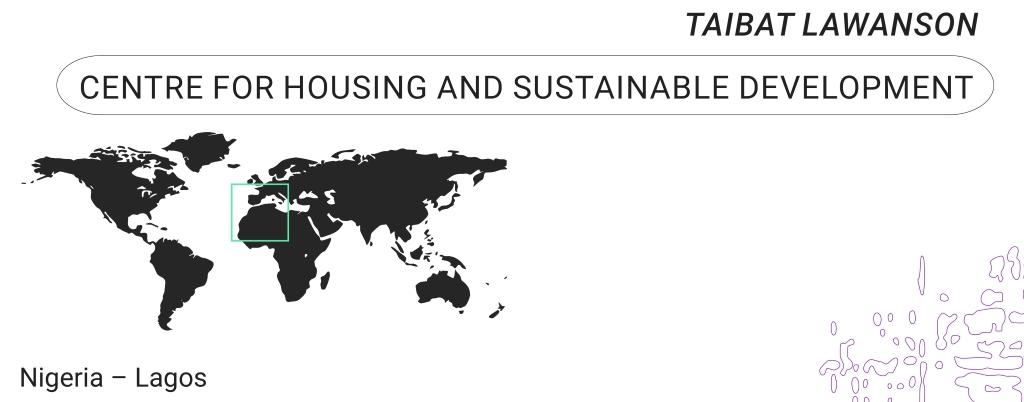
Guest: Taibat Lawanson - former Co-Director of the CHSD and current Leverhulme Professor of Planning and Heritage at the University of Liverpool
The CHSD was established with support from the African Development Bank and has been the African Research Universities Alliance’s (ARUA) “Center of Excellence” for urbanization since 2024 - receiving 175,000 Euros in funding annually for five years.
The basic idea: Solutions to urban challenges are already embedded in indigenous knowledge and community-led practices - they just need to be supported and empowered. For this reason, we prefer to work with communities that have already demonstrated their own capacity for action.
What makes it special: Research, graduate programs, policy advisory services, and practical initiatives - such as its own housing cooperative - are all interconnected. As the ARUA Center, CHSD also coordinates research among 13 African partner universities.
You can find the recorded session on YouTube: https://youtu.be/laK_H5UtclM?si=tRjHD9mh-067x6Ai
Click here for the presentation slides.
Session 8 – TDR Center, MIT World Peace University Goa & Perspectives from India
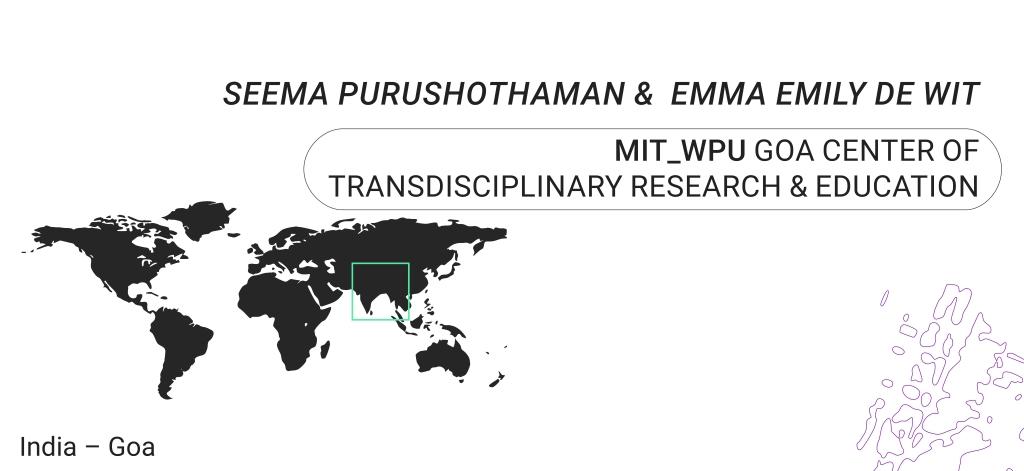
Guests: Seema Purushothaman - Senior Adjunct Fellow at Ashoka Trust for Research in Ecology and the Environment (ATREE), member of the TDR Center at MIT of WPU, Goa & Emma Emily de Wit - independent researcher at the TDR Center at MIT of WPU, Goa
The TDR Center is part of a newly founded university in Goa that has been transdisciplinary in its approach from the very beginning. Seema Purushothaman provided additional insight into government and grassroots initiatives across India.
The basic idea: Permeable walls between universities and society. Successful integration requires time, trust, and genuine epistemic diversity - and often fails when partners from the Global South are used solely for data collection.
What makes it special: Even as early as the bachelor’s level, students at MIT’s WPU Goa are expected to learn the fundamentals of knowledge production and epistemology and to work on real-world, socially relevant problems - guided by faculty members who have been specifically trained in transdisciplinarity.
You can find the recorded session on YouTube: https://youtu.be/bp8tw-l7JPQ?si=FHoLA2q3fKpw8r8p
Click here for the presentation slides.
Session 9 – Society for Transdisciplinary and Participatory Research, GTPF (Germany)
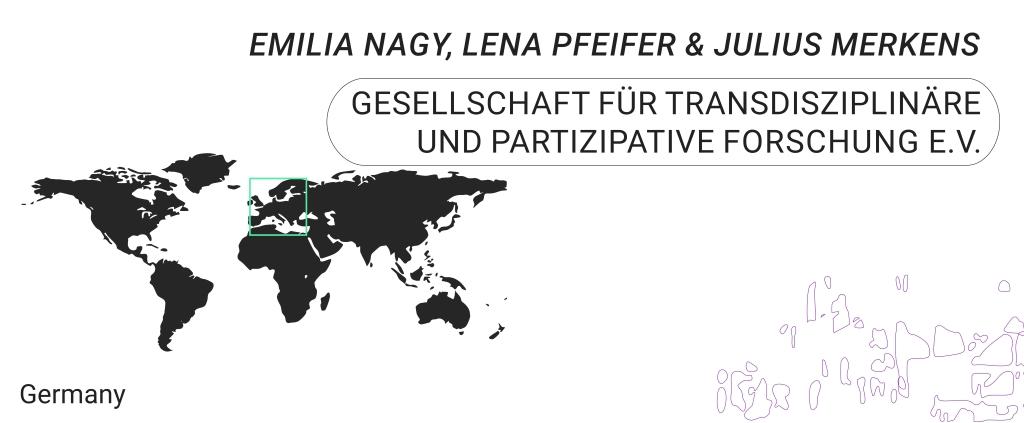
Guests: Julius Merkens – Head of the GTPF Administrative Office, Lena Pfeifer & Emilia Nagy – Research associates at the Leibniz Center for Agricultural Landscape Research (ZALF) and members of the Working Group on the impact of transdisciplinaryand participatory research
Founded in Berlin in March 2023, the GTPF now has over 300 members, including 36 institutional supporting members.
The basic idea: The GTPF sees itself as a professional “home” and collective voice for an otherwise fragmented field. Impact-oriented research cannot succeed through projects alone - it requires institutionalized exchange between the project and strategic levels.
What makes it special: Thematic working groups independently develop position papers and guidelines. For example, the “Impact” working group has developed a guideline on impact-oriented research management aimed at both researchers and decision-makers.
You can find the recorded session on YouTube: https://youtu.be/adTHIUsAunc
Click here for the presentation slides and here for the slides of the GTPF working group on 'impact-oriented reseach management"
A Common Thread
As diverse as the structures presented may be in terms of size, location, funding, and historical context, recurring patterns emerge: the search for stable, long-term funding; the importance of serving as a bridge between science and society; and a growing awareness - both within and around these structures - that knowledge does not originate solely from science, but equally from communities, indigenous knowledge systems, and lived practice. The SPOTLIGHTS – Let’s talk series has thus provided an inspiring glimpse into an international field of learning.
SPOTLIGHTS - Let’s talk was organized by
An Exploratory Study on Support Structures for Collaborative Research
The second part of the SPOTLIGHTS Program consists of the SPOTLIGHTS Study: in an exploratory study we try to identify structures and strategies that support transdisciplinary and collaborative research worldwide – from training programs and dedicated support teams to funding initiatives or research hubs.
The SPOTLIGHTS Study will present 15 profiles of good practices showcasing diverse approaches to supporting participatory and transdisciplinary research. Together, they provide insights into institutional pathways and enabling conditions for embedding and sustaining participatory and transdisciplinary research within research organizations and science systems.
The study is being conducted on behalf of the Laboratory for Transdisciplinary Research (TD-Lab) of the Berlin University Alliance and is expected to be published in September 2026.
If you have any questions, ideas, or suggestions, we would be happy to hear from you.
Contact persons: Nadin Gaasch, Sorka Tzschabran