
"Global Challenges from a European Perspective"
Interdisciplinary insights and a vibrant network: A look back at the 5th Oxford Berlin Research Partnership Symposium on 10 November 2026
Nov 12, 2026
Over 100 academics and guests from Oxford and Berlin gathered in Berlin on 10 November 2026 for a lively exchange of views. The symposium, comprising five sessions and a keynote address, was dedicated to the overarching theme of ‘Global Challenges from a European Perspective’.

Prof. Dr. Lucia Ruprecht mit Keynote Speaker Dr. Meera Sabaratnam
Image Credit: Michael Fahrig
The partnership’s Academic Directors, Professor Beate Kampmann (Charité – Universitätsmedizin Berlin) and Professor Alexander Betts (University of Oxford), opened the event at the GLS Campus in Prenzlauer Berg with an overview of the partnership’s current framework and activities, and set out the theme for the day: “be curious” – to be open-minded and inquisitive across research disciplines and national borders.
Dr Martin Mann, Managing Director of the Berlin University Alliance, pointed to the thematic breadth of the academic partnership as its great strength. “Beyond Boundaries”, the theme of the Berlin University Alliance’s next funding phase, aptly portrays the vibrant partnership between Oxford and Berlin. State Secretary Dr Henry Marx described the bridges that this partnership has already built as a response to the challenges of our time: no institution can tackle these challenges alone – just as no country can do so on its own.
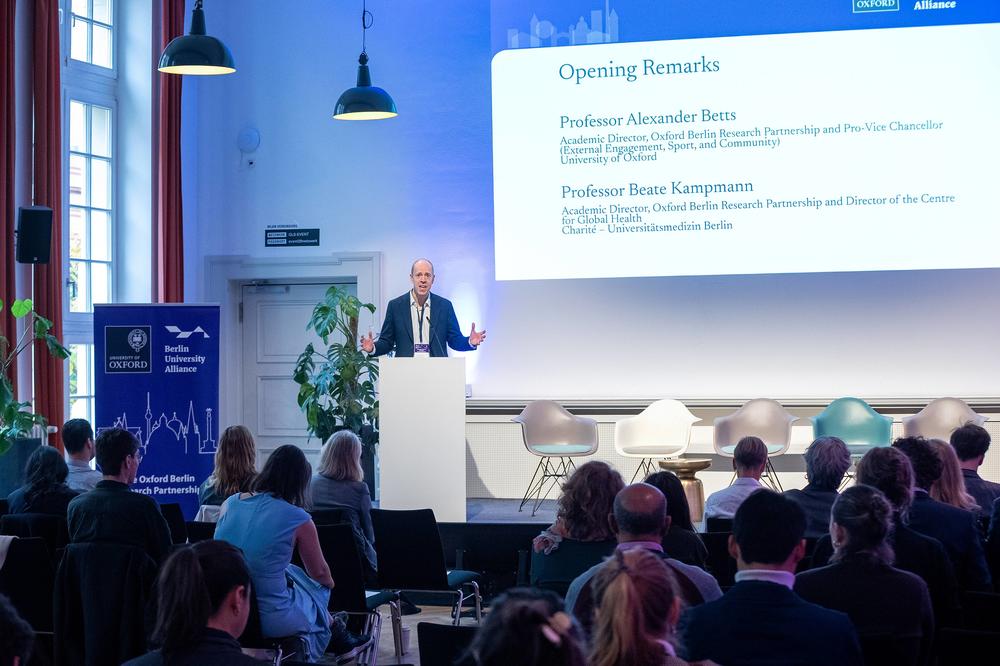
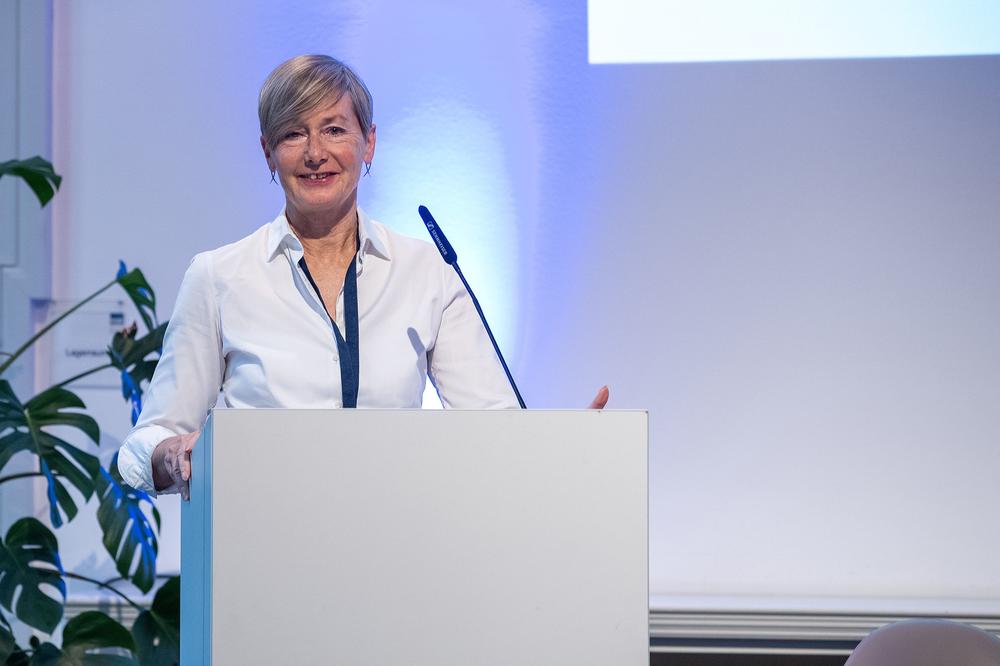

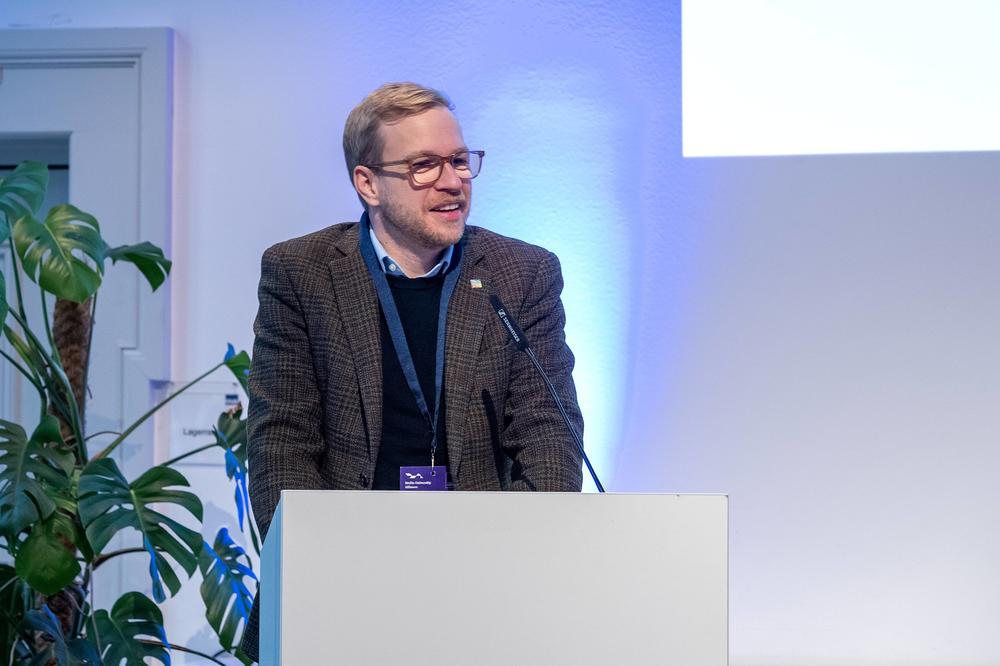
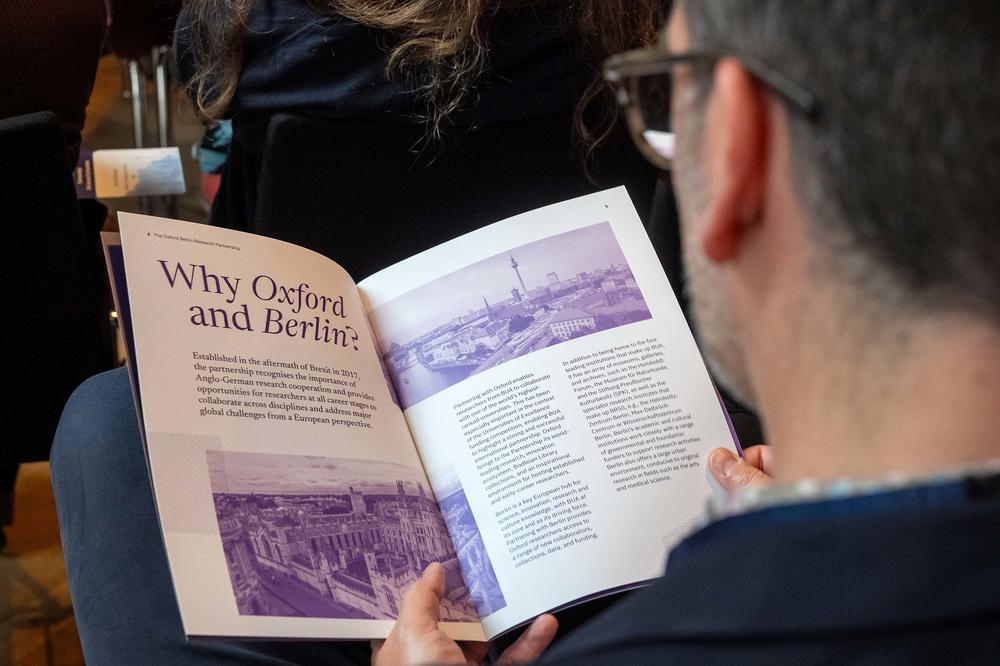
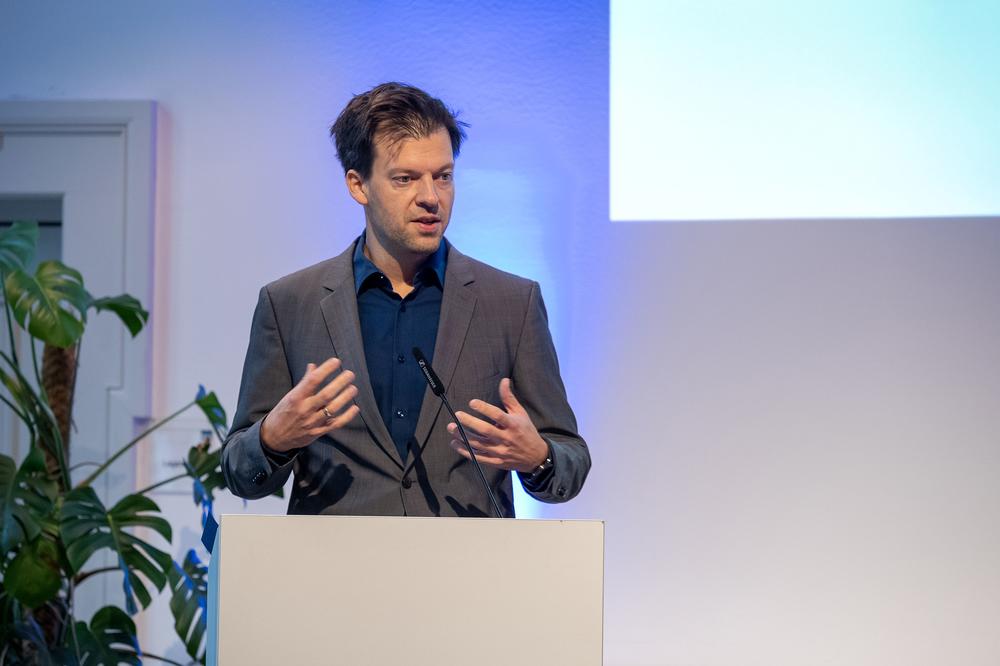
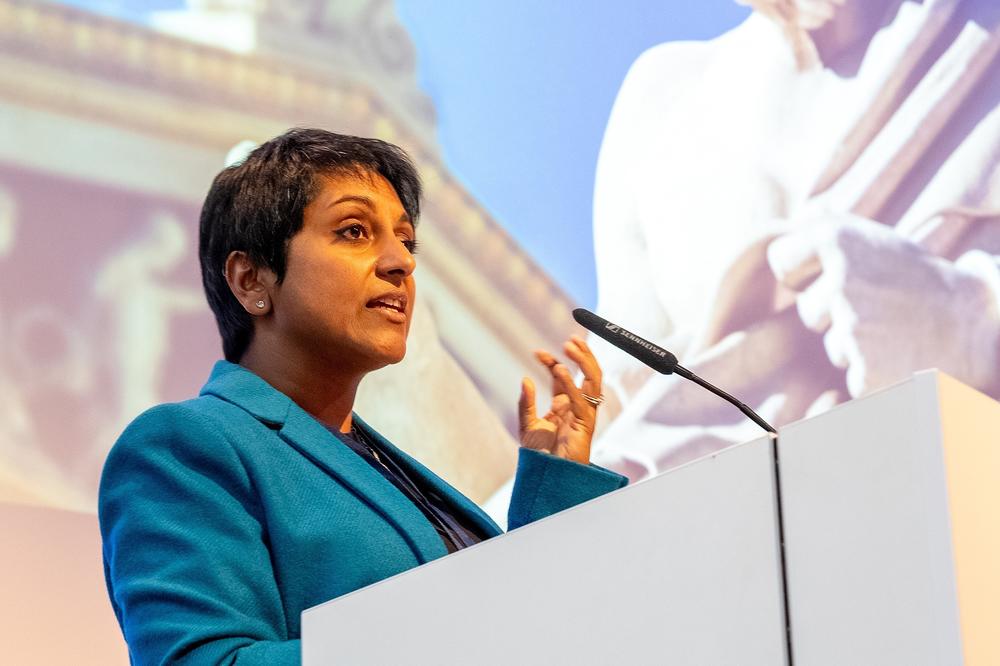
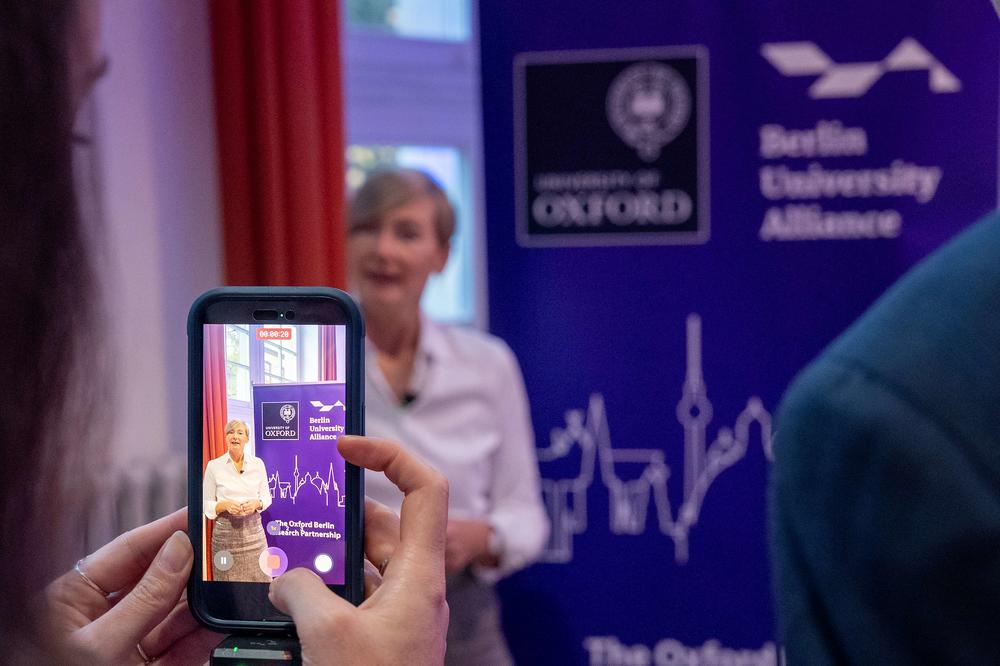
Professor Lucia Ruprecht, Vice Academic Director (Humanities) of the Oxford Berlin Research Partnership, introduced the keynote speaker, Dr Meera Sabaratnam, Associate Professor of International Relations at New College, University of Oxford, and set the scene for the interesting reversal of the event’s title: examining European challenges from a global perspective. In her keynote speech, entitled ‘Provincialising Europe? Rethinking Global Challenges from Where We Stand’, Sabaratnam described the evolving conception of Europe in international relations – from a liberal conception, through competing conceptions and Eurocentrism, to a process of provincialisation.
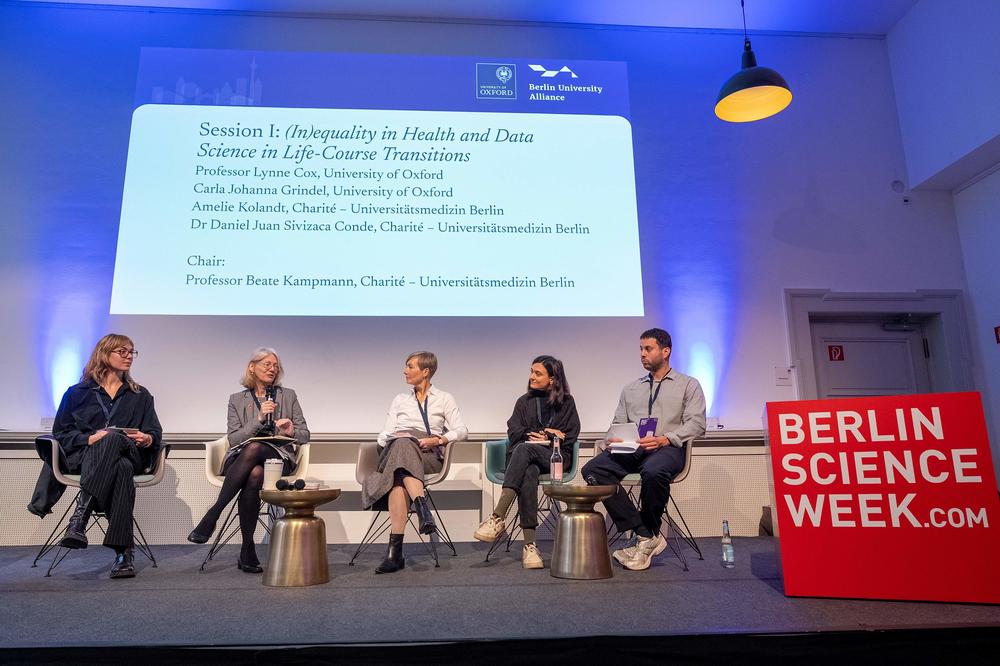
The first panel discussion, chaired by Beate Kampmann, focused on the topic of ‘(In)equality in Health and Data Science in Life-Course Transitions’. Professor Lynne Cox (University of Oxford) reported on new strategies in biomedical research that move beyond a ‘one-size-fits-all’ approach and must also take into account factors such as biological sex and environmental influences. Carla Johanna Grindel (University of Oxford) spoke about migrant health and the influence of the timing of migration; Amelie Kolandt (Charité) presented her research on access to abortion in Germany; and Dr Daniel Juan Sivizaca Conde (Charité) spoke about the responsible use of artificial intelligence in the analysis of medical data.
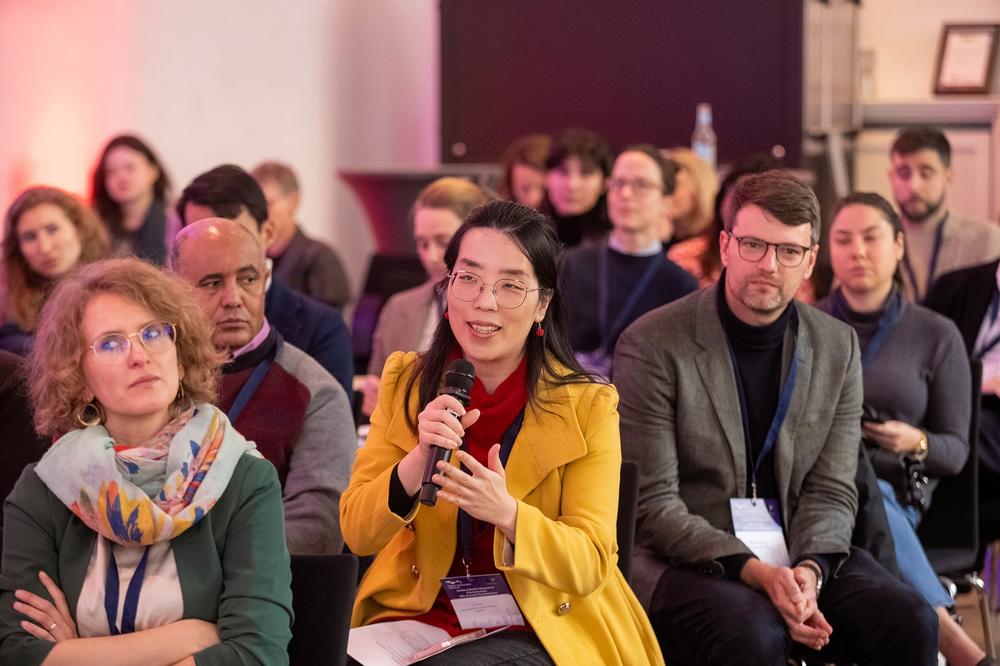
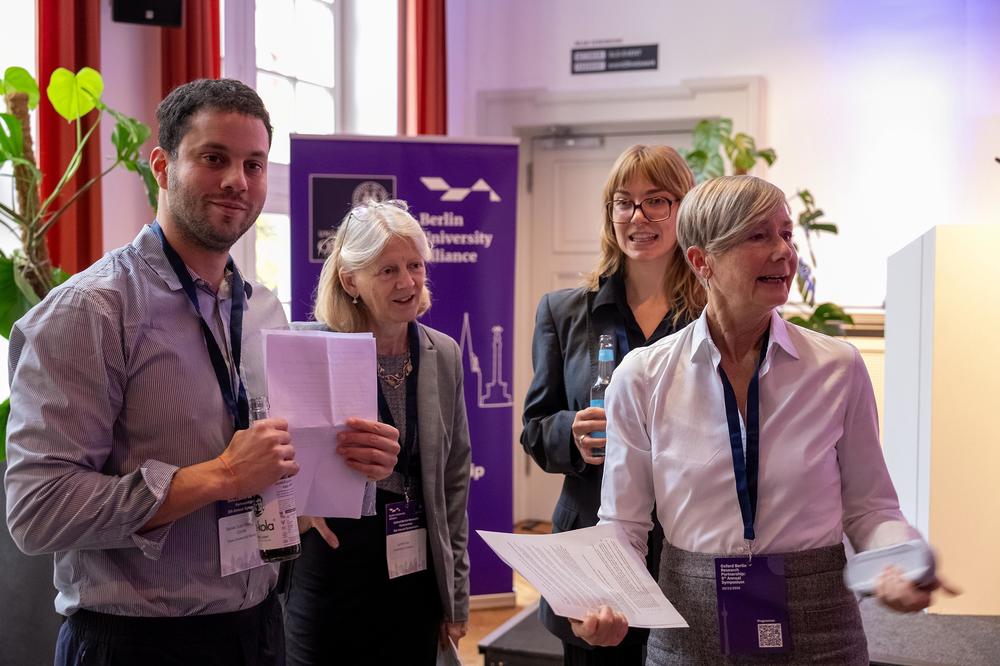
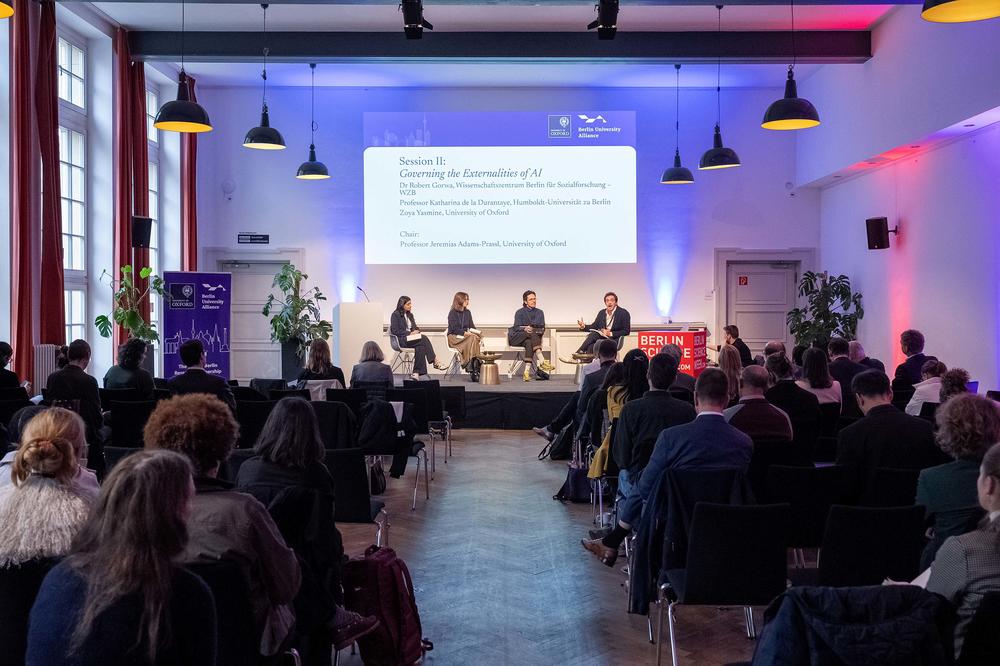
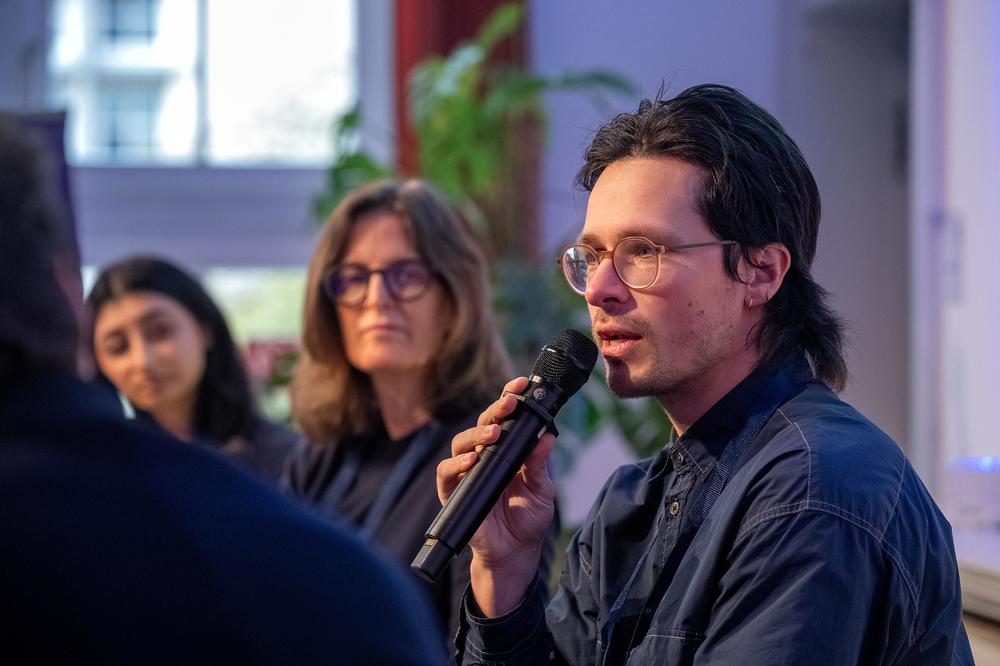
In the second session, Dr Robert Gorwa (WZB), Professor Dr Katharina de la Durantaye (HU) and Zoya Yasmine (University of Oxford) discussed, under the title ‘Governing the Externalities of AI’ and chaired by Professor Jeremias Adams-Prassl, Vice Academic Director (Social Sciences) of the Oxford Berlin Research Partnership, the implications of AI use and how these consequences can be regulated. A distinction must be made between open-source and closed models, and between whether one wishes to regulate negative or positive consequences. The influence of the portrayal and perception of AI in wider society, as well as in politics, was also discussed.
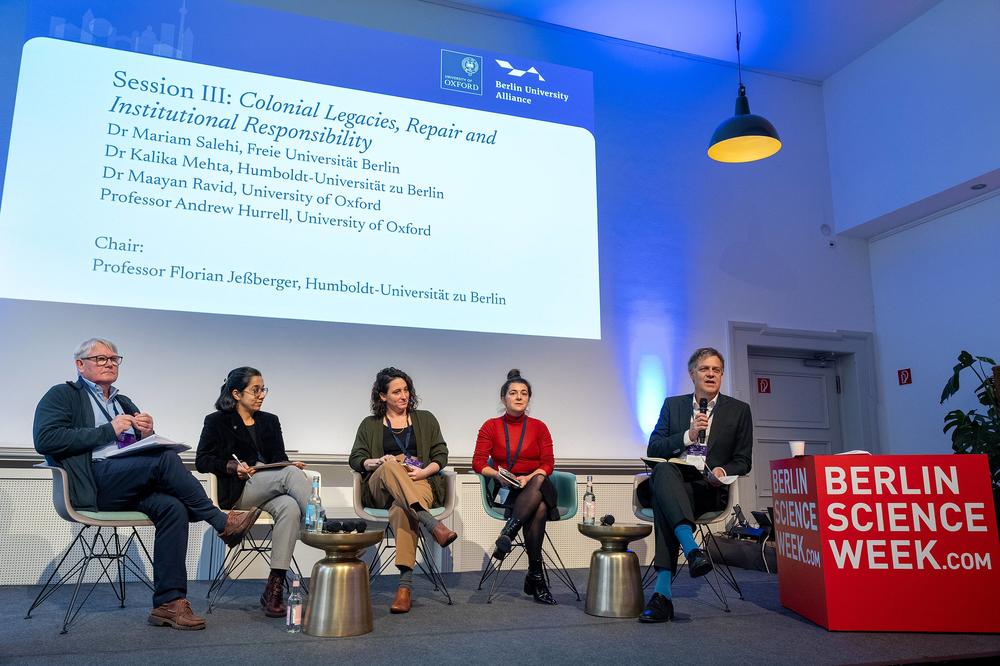
The third session was devoted to the topic of ‘Colonial Legacies, Repair and Institutional Responsibility’. The speakers – Dr Mariam Salehi (FU), Dr Kalika Mehta (HU), Dr Mayaan Ravid (University of Oxford) and Professor Andrew Hurrell (University of Oxford) – took part in a discussion chaired by Professor Florian Jeßberger (HU). The panel described the legacy of European exceptionalism as persistent and still as dominant as the adoption of a European perspective when considering colonial crimes, and discussed the role of reparations as a means of anti-colonial world making, as well as the continuation of colonial systems in contemporary forms of discrimination.
Mathilde ter Heijne, Professor of Performance and Time-Based Media at the Berlin University of the Arts, presented the art and research project of the same name developed between Oxford and Berlin in her lecture *Dropping In and Out – A Response to Uncertainty*. This interdisciplinary project explores discontinuities and gaps in artists’ productivity and career trajectories.
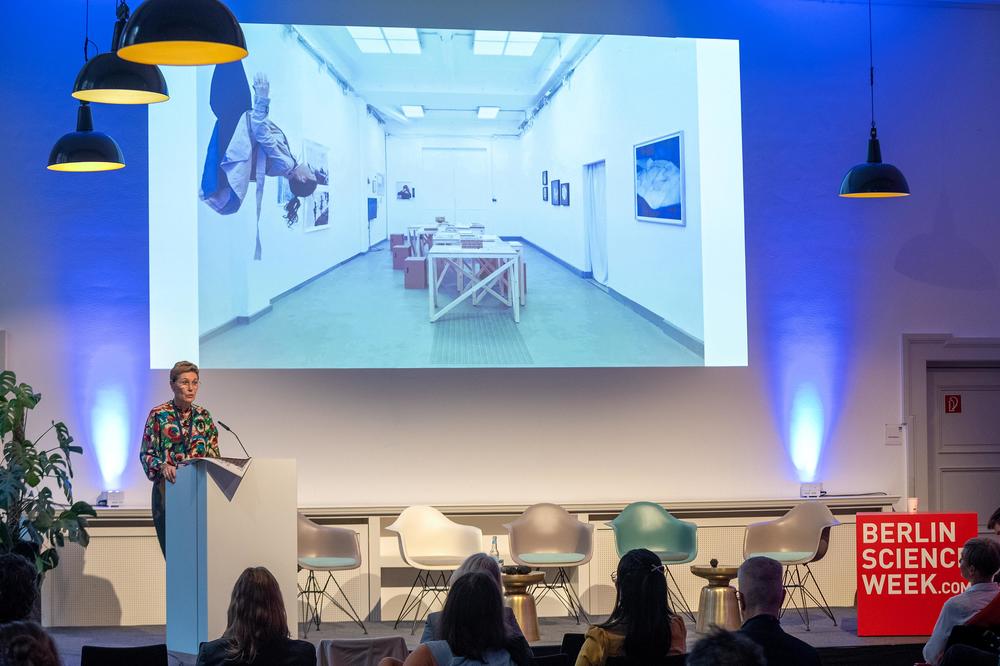
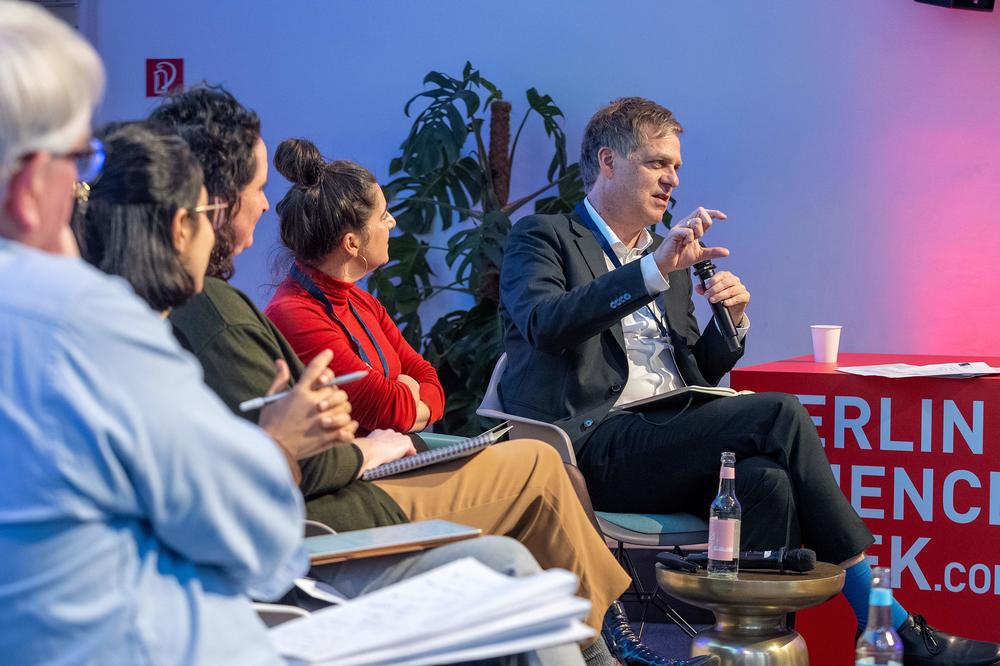
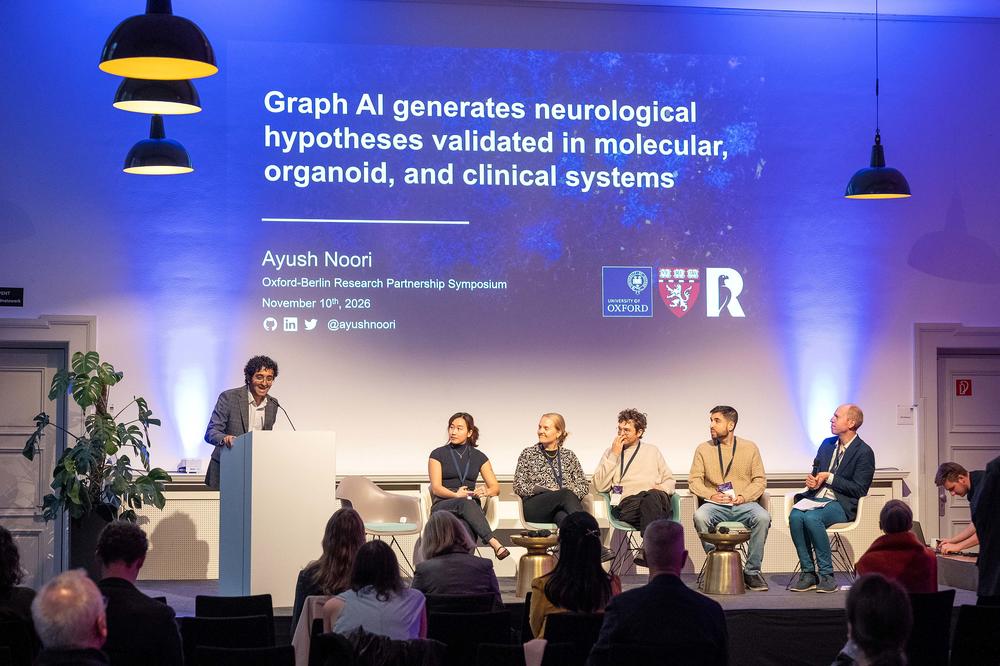
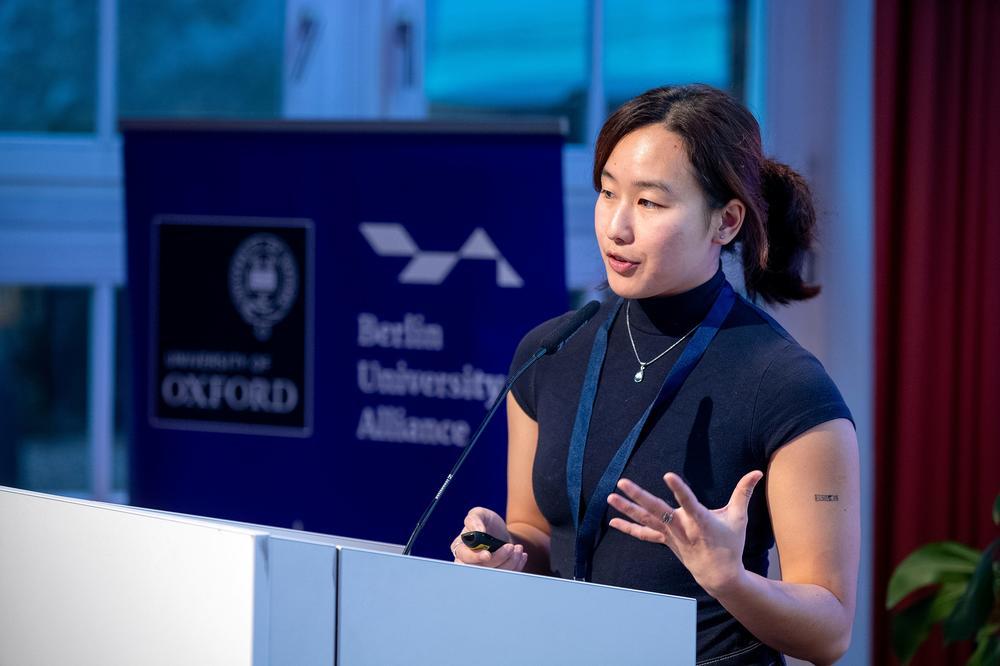
In the fourth session, five early-career researchers from Berlin and Oxford presented projects funded by the Oxford Berlin Research Partnership and the partnership between the UdK and the University of Oxford respectively. Ayush Noori (University of Oxford) presented his project on AI-assisted hypothesis generation for the treatment of neurological disorders; Dr Hannah Strothmann (University of Kassel) spoke about theology and architecture in ‘deep time’; and Valentin Niebler (HU) discussed worker organisation in the tech sector. Audrey Au Yong (University of Oxford) presented an approach to preventing the degradation of FOXP3 and improving protein stability. Dr Antonio Montañés Jiménez (University of Oxford) reported on his interdisciplinary project with a colleague from the HU on Christian flamenco music.
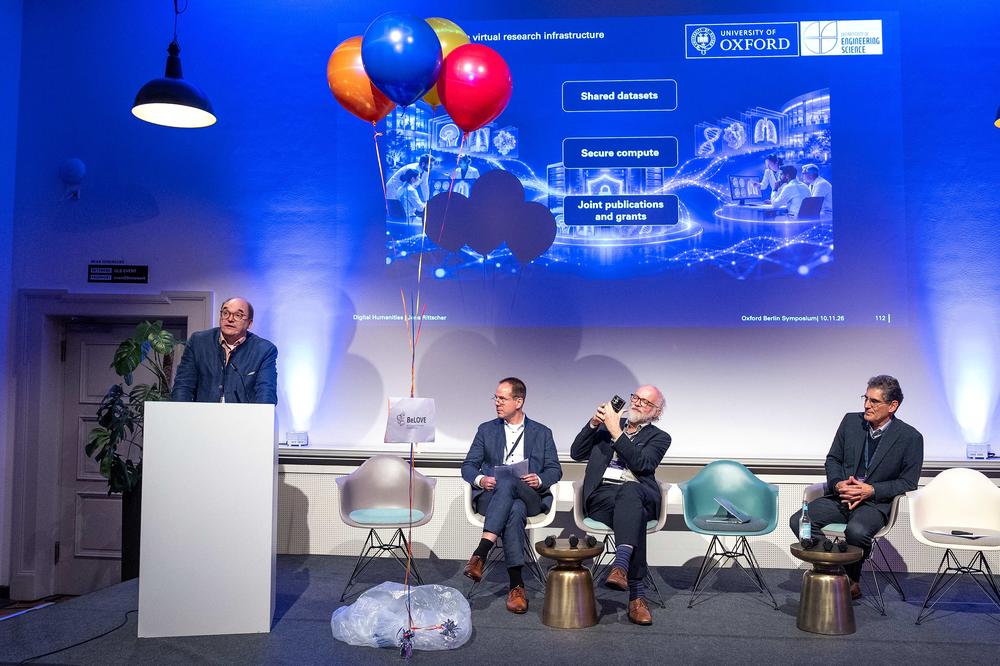
In the final session, entitled ‘Data Research Infrastructures in Practice – Technical, Ethical and Participatory Challenges’, Professor Jens Rittscher (University of Oxford), Dr Joachim Weber, Berlin Institute of Health @ Charité and Professor David de Roure (University of Oxford), chaired by Professor Peter Neubauer (TU), discussed the challenges of handling and exchanging data in a responsible and trust-building manner, and explored how the two institutions could collaborate in this regard.
To conclude the symposium, Professor Beate Kampmann drew on a concept from the keynote speech and described the day’s interdisciplinary exchange, with its various formats and topics, as ‘life in multiplicity’.